Proudly serving Tucson, Oro Valley, Marana, Sahuarita, Green Valley, Vail & surrounding areasCall or Text 24/7: 520-699-3263

Concrete Driveway, Foundation, and Patio Construction in Vail, AZ

Tucson Superior Concrete provides concrete driveway installation, concrete patio installation, and stamped concrete for homes and businesses in Vail, Arizona. Our Vail concrete services also cover sidewalks and walkways, slabs, foundations and footings, pool decks, repair and resurfacing, sealing and maintenance, and demolition and removal. We plan each project around caliche-heavy soil, drainage, expected loads, and the finish you want. Every estimate begins with a property walk so we can scope grade, base preparation, access, and structural requirements.

Vail sits roughly 24 miles southeast of Tucson and experiences wider swings between summer heat and winter nights than the Tucson basin. Its population grew from 2,484 in 2000 to 10,208 by the 2010 census, bringing newer driveways, footings, and slabs that must meet current Pima County standards. Caliche subsoil, intense monsoon runoff, and below-freezing winter nights all influence base preparation, drainage, joints, curing, and sealing. Call for a free concrete estimate, and we will walk the property with you before recommending an approach.

We serve the Rincon Valley, properties near the Rincon Mountains District of Saguaro National Park and Colossal Cave Road, and the Vail-to-Tucson corridor along Old Vail Road and Marsh Station Road.

★ ★ ★ ★ ★4.9/5 Average Rating - 20+ Years of Experience - Vail Concrete Contractor Specialists - Residential & Commercial
Concrete Services
Complete Concrete Services in Vail, AZ

We match each driveway, patio, walkway, slab, foundation, pool deck, repair, or removal plan to the property's load, drainage, soil, and finish requirements. Residential coverage includes properties near Colossal Cave Mountain Park, the southern extension of Houghton Road, and developments east of Wentworth Road, while our Tucson-area work also reaches Catalina Foothills, AZ .

Concrete Driveway Installation

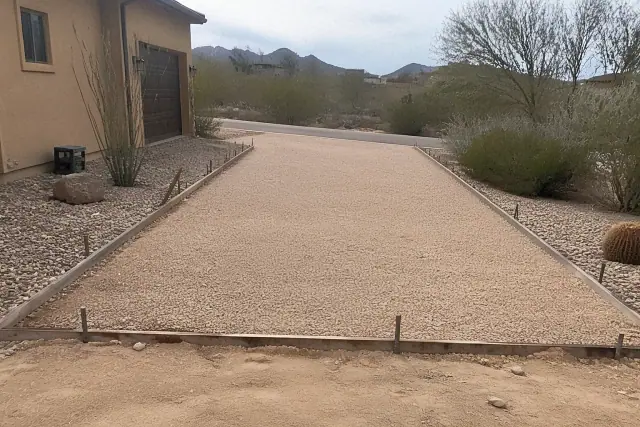
A leveled gravel base prepared for a concrete driveway installation in Vail, AZ, surrounded by Sonoran desert landscaping.

A standard residential driveway is typically four inches thick, with five or six inches used where trucks, RVs, or trailers will park. Broom-finish installation commonly runs $6 to $12 per square foot, depending on excavation, base depth, access, and project details, and every driveway is graded for drainage before the pour.

Explore Service

Concrete Patio Installation

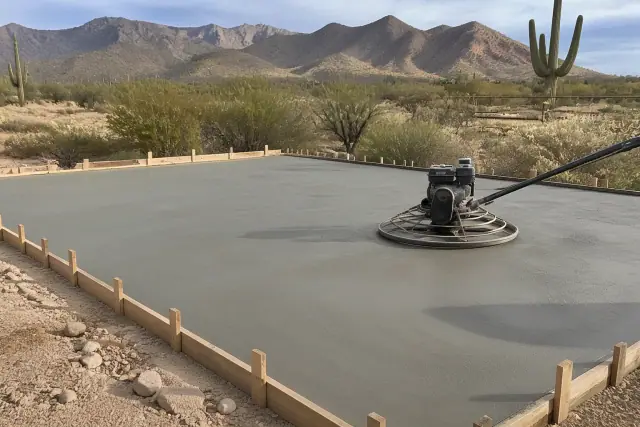
A power trowel smoothing wet concrete within wooden frames at a patio jobsite in Vail, AZ.

Patio slabs can support entertaining areas, shade structures, or a future ramada when thickness and reinforcement match the planned load. We offer broom finish, exposed aggregate, and stamped decorative concrete, with slope directed away from the foundation.

Explore Service

Stamped Concrete

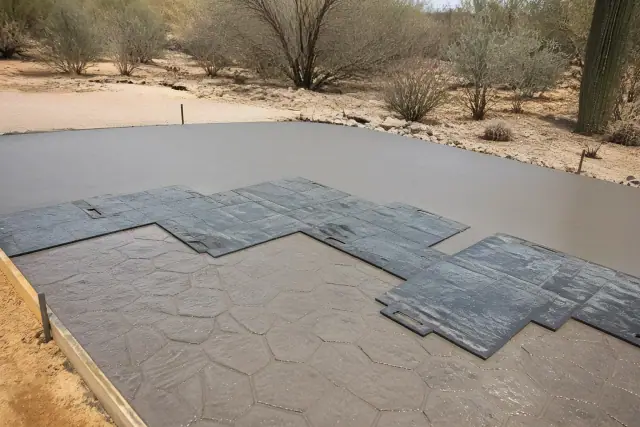
Textured mats pressing stone-like patterns into semi-hardened stamped concrete at a jobsite in Vail, AZ.

Stamped and integral-color concrete can echo pavers, flagstone, or brick without the same joint-maintenance needs. Decorative finishes commonly run $12 to $18 per square foot and can coordinate driveways, patios, and pool decks with Sonoran-style architecture.

Explore Service

Concrete Sidewalks & Walkways

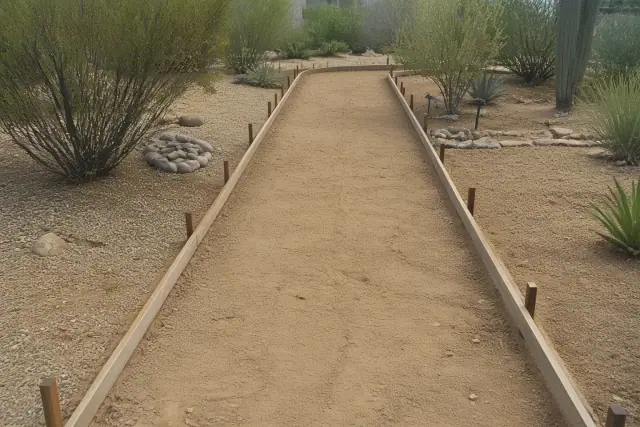
Wooden sidewalk forms set up for a new concrete path in Vail, AZ, surrounded by Sonoran desert landscaping.

Walkways connect driveways, entries, and outdoor living areas while receiving the same careful subgrade and base preparation as larger slabs. Standard walkway thickness is three to four inches, and a broom finish adds slip resistance while color and texture can match nearby concrete.

Concrete Slab Installation

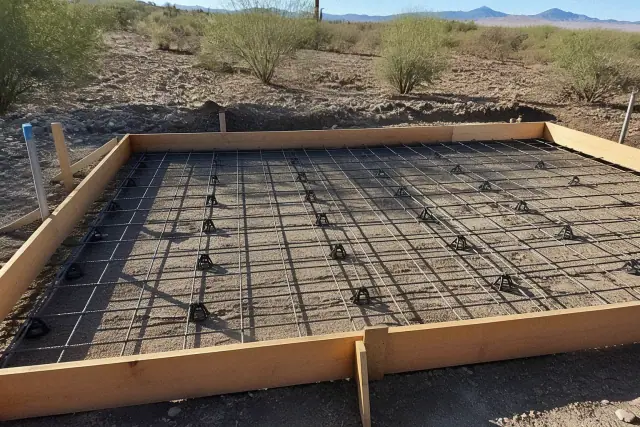
Steel wire reinforcement grid on spacers inside a wooden frame for a concrete slab project in Vail, AZ.

We place concrete for shed pads, workshop floors, and RV parking slabs, sizing the slab and reinforcement for its long-term load. Wire mesh or a rebar grid is selected as needed, and the subgrade and gravel base are compacted before concrete placement.

Concrete Foundations & Footings

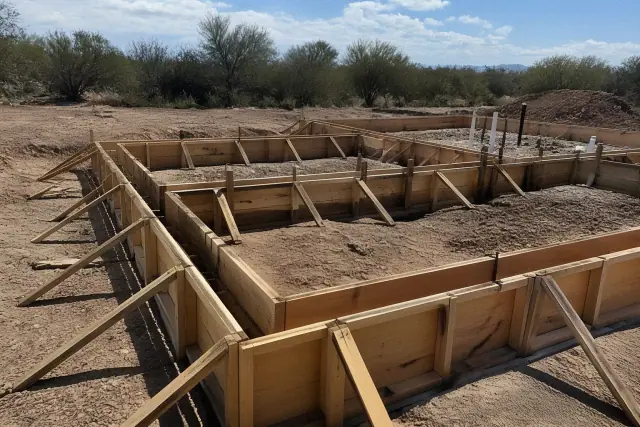
Wooden formwork for a concrete foundation at a jobsite in Vail, AZ, surrounded by desert landscape.

Foundations and footings are excavated to the required frost and bearing depth, reinforced, formed, and poured for the structure they will support. We follow International Residential Code requirements as adopted by Pima County and coordinate required permits and inspections for qualifying structural work.

Concrete Repair & Resurfacing

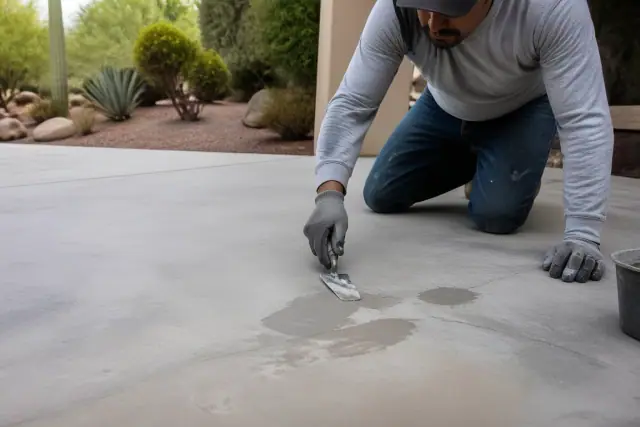
Contractor troweling a bonding compound to repair pitted concrete flooring in a Vail, AZ residential yard.

For cracked, settled, spalled, or worn concrete, we first determine whether the damage is cosmetic or structural. A bonded resurfacing overlay can renew a sound driveway or patio surface, while deeper movement may call for removal and a properly prepared repour.

Concrete Sealing & Maintenance

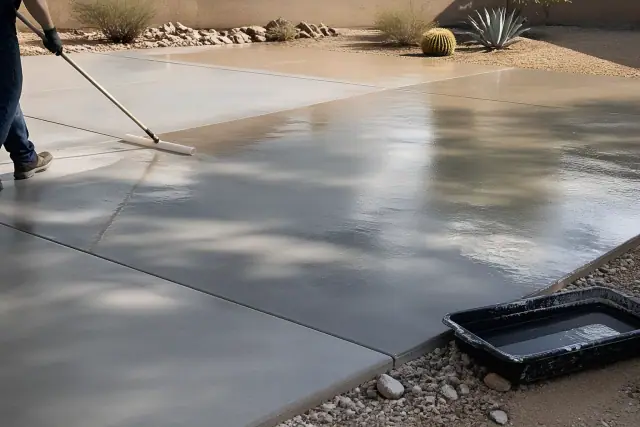
Concrete sealing process with a wet-look finish on a jobsite in Vail, AZ, surrounded by desert landscape.

We recommend sealing new driveways, patios, and pool decks within the first year, followed by resealing every two to three years. A penetrating sealer helps limit staining, oil penetration, monsoon moisture intrusion, UV wear, and freeze-thaw surface scaling.

Concrete Pool Decks

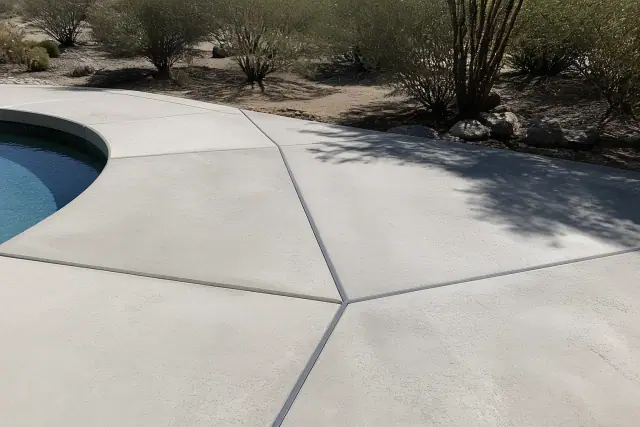
Concrete pool deck expansion joints with flexible filler in Vail, AZ, under bright desert sun.

Pool decks need a broom, knockdown, or exposed aggregate finish that remains practical underfoot and slip-resistant when wet. We slope the deck away from the coping, place control joints around the pool shell, and offer decorative colors that coordinate with existing patios or driveways.

Concrete Demolition & Removal

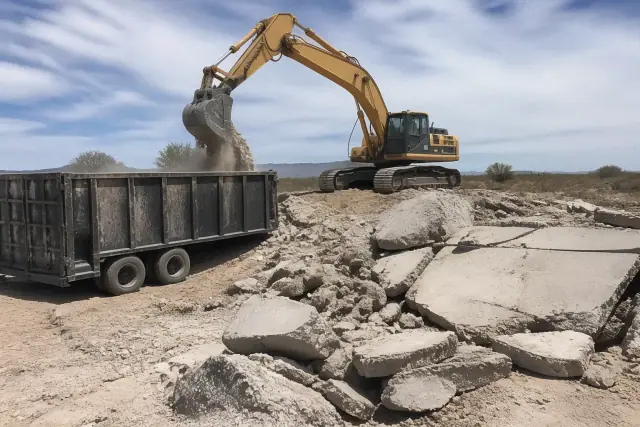
Heavy machinery breaking concrete and loading rubble into a container at a demolition jobsite in Vail, AZ.

We handle breakup, haul-off, and disposal of old, cracked, or heaved driveways, patios, and slabs before replacement or another site use. Debris goes to appropriate Pima County disposal facilities, and the cleared area is left graded for the next phase.

Project Planning

Choosing the Right Concrete Approach in Vail

The right specification depends on vehicle or structural loads, native caliche, drainage direction, reinforcement, finish, and access for a ready-mix truck. Reviewing those conditions before excavation helps align the base, slab, joints, curing plan, and permit needs with the way the concrete will be used.

Match Thickness to the Load

Passenger vehicles, work trucks, trailers, structures, and workshop equipment place different demands on concrete. We confirm expected use before setting excavation depth, slab thickness, and reinforcement so the specification fits the actual load.

Prepare Caliche and the Gravel Base

Caliche is a cemented calcium carbonate layer that can be rock-hard when dry and nearly impermeable when wet. It may need to be broken up, removed, or bridged with an engineered base; a compactable crushed gravel base is typically four to six inches deep and placed in lifts for drainage and stable support.

Plan Slope and Drainage

Monsoon season typically runs July through September, bringing short bursts of runoff that can collect at slab edges and unsealed joints. Grading, slope, and drainage channels should direct that water away from structures and the gravel base.

Select a Practical Finish

Broom finish favors traction, exposed aggregate adds texture, and stamped or colored concrete provides a decorative surface. Because unshaded concrete can exceed 140 degrees in summer, finish choice and curing methods must account for direct desert exposure.

Specify Reinforcement and Concrete Strength

Wire mesh, rebar grids, and mix strength are chosen for the slab, soil, and load rather than applied as one standard recipe. Most residential slabs and footings in the region call for a minimum of 2,500 to 3,000 PSI, with higher-strength concrete used when conditions require it.

Allow Time for Curing and Protection

New concrete needs roughly seven days of proper curing before it handles vehicle traffic, while full strength develops over about 28 days. A compatible penetrating sealer after curing helps protect the finished surface from staining, moisture, and ultraviolet exposure.

Vail Concrete Issues

Common Concrete Problems for Vail Properties

Concrete failures in Vail often trace back to caliche movement, inadequate compaction, concentrated monsoon runoff, poor joint placement, rushed curing, or missing sealer. A site assessment can separate surface wear that may accept an overlay from structural movement that requires removal and new base preparation.

Request an Assessment

Caliche-Related Settlement

A slab placed over untreated or poorly bridged caliche may lose even support as water moves along the base. That movement can leave a driveway settled, heaved, or cracked even when the surface finish initially looked sound.

Monsoon Water Intrusion

An intense monsoon can deliver more water in an hour than a slow winter storm brings in a week. Without proper slope or sealed joints, runoff can pool at slab edges, erode the base, and accelerate cracking or settlement.

Random Slab Cracking

Control joints create planned locations for normal curing and temperature movement. If they are missing or spaced incorrectly for slab thickness and panel size, random cracks are more likely to appear within the first few years.

Rapid-Cure Surface Crazing

Hot, dry conditions can pull moisture from fresh concrete too quickly. Poor curing timing or an unsuitable curing compound can reduce surface quality and leave a fine crazed pattern as the slab hardens.

Freeze-Thaw Surface Scaling

Winter nights in Vail regularly fall below freezing. Moisture in improperly cured or unsealed concrete can expand and contract through freeze-thaw cycles, causing the surface to scale over a handful of seasons.

Unsealed Surface Wear

Direct Arizona sun and repeated moisture cycles wear unsealed concrete faster and make oil or other stains harder to manage. Periodic joint maintenance and resealing help slow UV breakdown, moisture entry, and surface scaling.

Why Choose Us

Why Choose Tucson Superior Concrete in Vail?

Our process is built around Vail's caliche, temperature range, drainage demands, and longer ready-mix transit from Tucson batch plants. As a licensed concrete contractor familiar with Pima County requirements, we coordinate qualifying permits and inspections and provide a written estimate after reviewing the property.

Vail-Specific Ground Knowledge

We account for decomposed granite, cemented caliche, and the graded lots common in subdivisions built over the last two decades. That local assessment informs excavation, compaction, drainage, and joint planning before concrete arrives.

Permit and Pour Coordination

Structural concrete and some driveway aprons may require Pima County permitting and inspection. We also schedule around the longer truck haul from Tucson, adjusting mix design and placement timing so the concrete can be finished correctly on arrival.

On-Site Scope and Written Estimate

We review grade, soil, access, drainage, dimensions, loads, and finish preferences at the property before work begins. The resulting written estimate reflects the site rather than relying on a generic per-foot figure, while finish and sealer choices are selected for Arizona UV exposure instead of materials that may fade or chalk after only a couple of summers.

Concrete Installation Process

Our Concrete Installation Process in Vail

A durable pour starts before the truck arrives. We move from site assessment and layout through demolition, excavation, base preparation, forming, reinforcement, placement, finishing, joint work, curing, and sealing in a sequence matched to the property.

01.

Site Walk and Layout

We assess grade, drainage direction, soil composition, caliche, access, and expected loads. The layout, dimensions, thickness, and finish are then confirmed before excavation starts.

02.

Demolition and Excavation

Existing concrete is broken up and hauled off when replacement is required. We excavate for both the planned slab and its base, addressing any caliche layer that would interfere with compaction or drainage.

03.

Base and Drainage Preparation

Crushed gravel is placed and compacted in lifts to form a stable, draining platform. The grade is shaped so runoff moves away from structures instead of collecting against the slab edge or washing out the base.

04.

Forms, Reinforcement, and Mix

Forms establish the final dimensions, elevations, and slope. Reinforcement and mix design are selected for the planned load, soil conditions, travel time from the batch plant, and structural specification.

05.

Pour, Finish, and Control Joints

Concrete is placed to grade and finished with the selected broom, aggregate, stamped, or colored surface. Control joints are cut at intervals matched to slab thickness and panel size so normal curing movement follows planned lines.

06.

Cure, Seal, and Maintain

We protect fresh concrete while it cures and explain when the surface can accept foot or vehicle traffic. Once curing is complete, sealing and future joint maintenance help manage staining, monsoon moisture, UV exposure, and winter freeze-thaw cycles.

Project Applications

Concrete Project Outcomes for Vail Homes & Businesses

Case Study 1: Driveway planning: A passenger-vehicle driveway can use a broom finish for traction, while RV or trailer parking calls for a heavier-load slab specification and reinforcement plan.

Case Study 2: Outdoor living: A sloped patio or pool deck can combine exposed aggregate, stamped texture, or integral color with drainage and control joints suited to the layout.

Case Study 3: Commercial and structural work: Slabs, foundations, sidewalks, ramps, parking areas, loading zones, and pedestrian access are specified for traffic, accessibility, reinforcement, and permitting requirements.

Plan Your Project

Request a Vail Concrete
Project
Estimate

Tell us whether you are planning a driveway, patio, walkway, slab, foundation, pool deck, repair, or removal project. We will review the property, discuss finish and load requirements, and provide a free site-specific written estimate.

Vail Concrete Help

FAQs About Concrete in Vail, AZ

These answers cover driveway thickness, gravel bases, cost factors, curing, sealing, permitting, caliche, and other practical questions about concrete work in Vail. A site visit is still the best way to match the specification and estimate to your property.

Call Our Concrete Team

Four inches is the accepted standard for a residential driveway carrying passenger vehicles. For regular truck, RV, or trailer loads, we typically recommend five or six inches with added reinforcement after assessing the expected use.

Yes. Compactable gravel provides stable load distribution and drainage over the prepared subgrade, which is especially important where caliche does not drain or compact like ordinary soil.

The driveway sits over compacted native subgrade topped by typically four to six inches of compactable gravel. Where caliche interferes with compaction or drainage, it may need to be broken through, removed, or properly bridged before the base is placed.

Cost depends on whether 200 ft refers to length or square footage, plus thickness, finish, excavation, base depth, and access. At $6 to $12 per square foot for broom-finish concrete, a driveway in the 400- to 600-square-foot range typically falls between roughly $3,000 and $7,000; decorative work is closer to $12 to $18 per square foot. We provide a free site-specific estimate rather than pricing from one dimension alone.

Common mistakes include skipping or under-compacting the gravel base, pouring over unaddressed caliche, providing too little drainage slope, and spacing control joints incorrectly. Rushing the curing period or leaving the surface unsealed can also shorten service life.

New concrete needs roughly seven days of proper curing before it can handle vehicle traffic. Full strength develops over about 28 days, and hot, dry weather makes moisture control during curing especially important.

We recommend sealing a new driveway, patio, or pool deck within its first year and resealing every two to three years after that. Sealing helps limit stains, oil penetration, monsoon moisture intrusion, UV wear, and freeze-thaw scaling.

A properly installed and sealed driveway commonly lasts 25 to 30 years, and some well-maintained slabs last longer. Base preparation, drainage, curing, joint maintenance, load, and periodic resealing all influence service life.

Foundations, footings, and other concrete tied to structural elements generally go through Pima County Development Services for permitting and inspection. A driveway apron connecting to county right-of-way may also require a permit depending on its location and drainage impact.

Most residential slabs and footings in the region call for concrete rated at a minimum of 2,500 to 3,000 PSI. Higher-strength mixes may be specified when soil conditions, structural design, or load demands require them.

Caliche is a cemented calcium carbonate layer that can be hard when dry and nearly impermeable when wet. If it is not addressed during excavation and base preparation, water can collect along the slab and uneven support can contribute to settlement or cracking.

Monsoon downpours concentrate runoff over a short period. Proper grading, slope, drainage channels, and sealed joints help keep water from pooling at slab edges, moving under the base, or flowing back toward a structure.

Options include broom finish, exposed aggregate, stamped patterns, integral color, and pool-deck textures such as knockdown. The best fit depends on traction, direct-sun exposure, decorative goals, maintenance, and whether the surface will be wet under normal use.

Yes. Residential work includes driveways, patios, walkways, pool decks, workshop slabs, and foundations, while commercial work includes slabs, foundations, parking areas, loading zones, sidewalks, ramps, and pedestrian access. Commercial specifications account for higher traffic loads and accessibility requirements.

A bonded overlay can restore a worn driveway or patio when the underlying slab remains sound. If cracking, settlement, or heaving points to structural movement, removal and a new pour over a corrected base may be the better option.