Proudly serving Tucson, Oro Valley, Marana, Sahuarita, Green Valley, Vail & surrounding areasCall or Text 24/7: 520-699-3263

Concrete Repair, Resurfacing, Crack Patching & Slab Leveling in Tucson, AZ

Tucson Superior Concrete provides concrete repair and resurfacing for driveways, patios, sidewalks, pool decks, and interior slabs in Tucson, Arizona. We repair cracks and spalls, level settled panels, and restore worn surfaces with overlays or skim coats when the base remains sound. Our crews also handle structural patching and concrete floor restoration for residential and commercial properties. Each recommendation begins with the slab's condition rather than a one-size-fits-all treatment.

Exposed concrete in Tucson regularly sees summer pavement temperatures above 140 degrees, while caliche-heavy soil and monsoon saturation can shift support beneath a slab. Those conditions can turn surface wear into wider cracks, spalling, or vertical displacement if the cause is missed. We determine whether the right path is an isolated patch, resurfacing, leveling, or replacement before quoting the work. Materials may include polymer-modified overlays, fiber-reinforced patching compounds, and vapor-permeable sealers selected for alkaline, high-pH soils.

Structural repairs follow American Concrete Institute guidance for surface preparation and bond strength, while permits are coordinated through City of Tucson Planning and Development Services or Pima County Development Services when the jurisdiction requires them.

Tucson Superior Concrete provides concrete repair and resurfacing throughout Tucson, Oro Valley, Marana, Sahuarita, and the surrounding Pima County metro area.

★ ★ ★ ★ ★4.9/5 Average Rating · 20+ Years of Experience · Thousands of Customers Helped · Licensed & Insured · Residential & Commercial

Concrete Repair Options & Benefits

What Is Concrete Resurfacing?

Concrete resurfacing adds a new polymer-modified cement wear layer, typically between 1/8 inch and 2 inches thick, over structurally sound existing concrete. It renews the visible surface without requiring a full tear-out.

Repair targets isolated damage such as a crack, spall, or settled corner. Resurfacing recoats the whole slab to address cosmetic wear, minor cracking, discoloration, or a rough texture with a uniform finish.

Many Tucson slabs need both approaches: structural problems are patched or leveled first, and a compatible overlay is then applied for a consistent surface. An inspection establishes whether the base is stable enough for that sequence.

Benefits of Concrete Repair & Resurfacing

The right repair approach preserves usable concrete while addressing the damage that affects appearance, footing, and long-term performance. Surface condition, slab movement, traffic, and exposure guide the recommended treatment.

  • Preserve a sound slab without demolition, haul-off, and new formwork
  • Restore a uniform finish across minor cracking, wear, and discoloration
  • Seal routed cracks with flexible polyurethane or semi-rigid epoxy
  • Correct trip hazards through grinding, lifting, or panel repair
  • Choose broom, stamped, stained, epoxy, or micro-topping finishes
  • Improve stain and chemical resistance on suitable covered patios
  • Use vapor-permeable sealing suited to alkaline, high-pH soil conditions
  • Adapt repairs to residential slabs and commercial flatwork
Tucson Concrete Repair

Concrete Repair & Resurfacing Services

Different slabs fail in different ways. Our repair services address vehicle loads, sun exposure, moisture, soil movement, root intrusion, and interior wear with methods matched to each surface.

Driveway Crack Repair

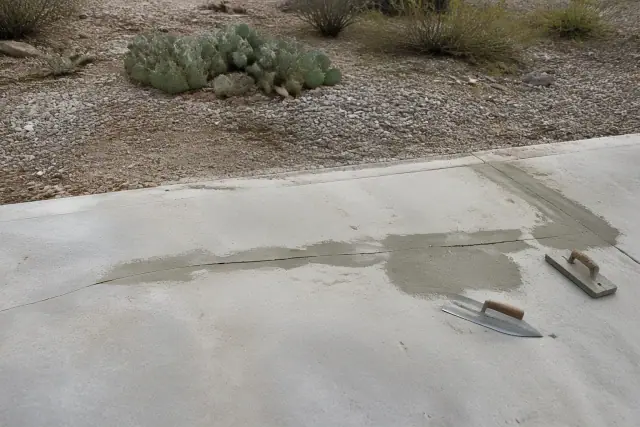
Worker troweling bonding compound into a concrete driveway crack in Tucson, AZ with desert landscaping in the background.

Driveway cracks are routed to a minimum 1/4-inch width and depth before filling. Where needed, we install backer rod and use flexible polyurethane or semi-rigid epoxy sealant rated for exterior slab movement, then evaluate whether resurfacing would give the repaired driveway a uniform finish.

Request Estimate

Patio Resurfacing

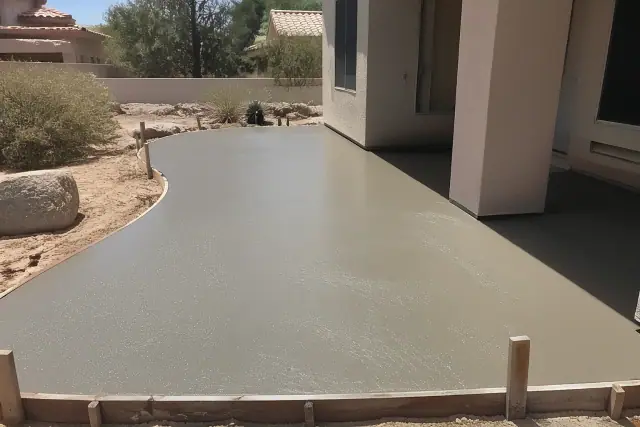
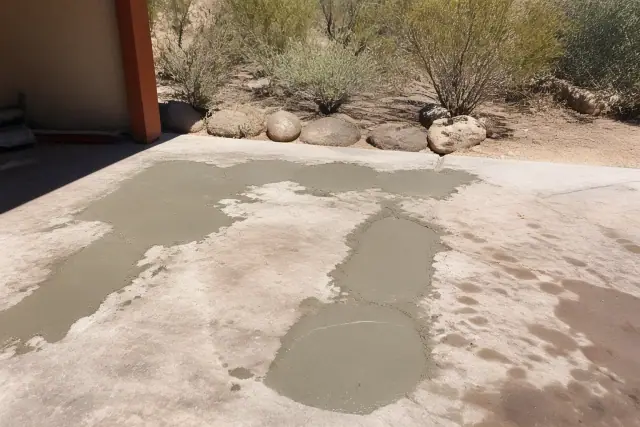
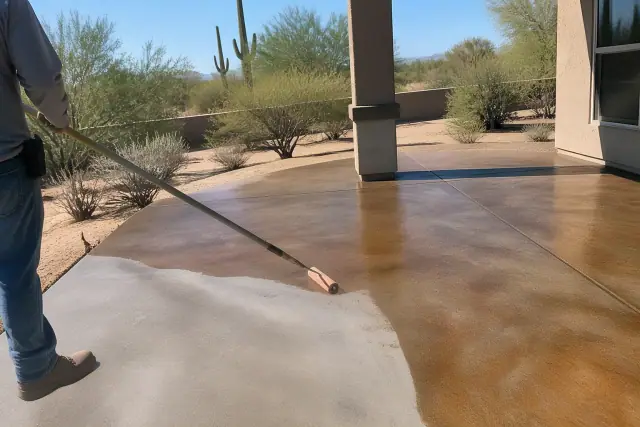
Freshly applied patio resurfacing on a concrete floor in Tucson, AZ, with desert landscaping in the background.

Patio evaluation looks for surface crazing, worn coatings, and efflorescence caused when moisture carries salts toward the surface. Broom-finish overlays, stamped textures, stains, micro-toppings, and epoxy coatings for covered areas provide different combinations of appearance, texture, and resistance.

Request Estimate

Sidewalk Trip-Hazard Repair

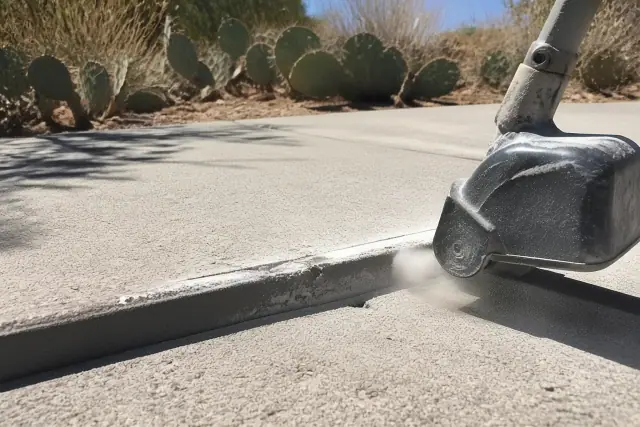
Contractor using a grinding tool to repair a raised concrete sidewalk edge in Tucson, AZ, with desert cacti in the

A vertical offset of just 1/4 inch can catch a shoe or wheelchair caster. Minor lips may be reduced with diamond concrete grinding, while larger displacement can require lifting, releveling, or panel replacement; public-facing routes are also evaluated for applicable slope, cross-slope, and surface-continuity requirements.

Request Estimate

Sunken Concrete Leveling

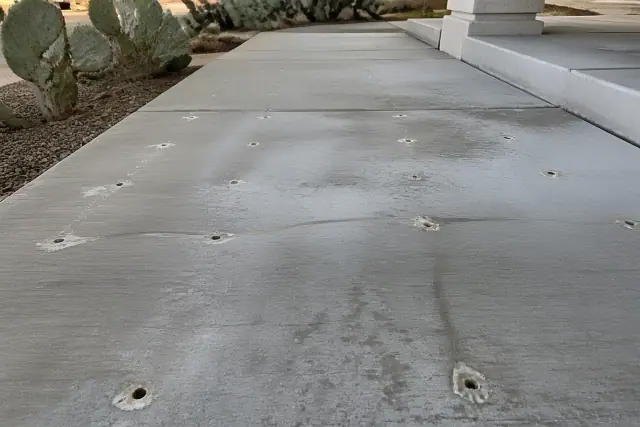
Sunken concrete leveling with drill ports and polyurethane foam on a Tucson, AZ jobsite with nearby prickly pear cacti.

Settled panels may be raised with cement-based mudjacking slurry or lightweight polyurethane foam injection. The foam expands through small penetration holes and cures within about 15 minutes while adding less dead load to marginal sub-base material; soil conditions and slab thickness determine which method fits.

Request Estimate

Slab and Spalling Repair

Freshly applied concrete repair compound with visible trowel marks on a slab in Tucson, AZ, surrounded by desert scrub.

Spalling repair starts by removing deteriorated material back to sound concrete. Exposed rebar is treated with a corrosion-inhibiting primer before the surface is rebuilt with a fiber-reinforced repair mortar rated for structural bonding.

Request Estimate

Interior Floor Restoration

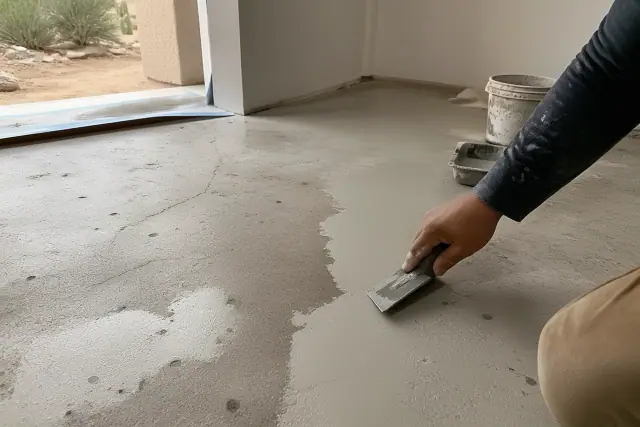
Contractor troweling bonding compound to repair pitted concrete flooring at a home in Tucson, AZ.

After old tile or carpet is removed, a sound interior slab can be restored through multi-step diamond grinding and polishing. A densifier and sealer refine the exposed aggregate for garage floors, basements, commercial slabs, and mid-century Tucson homes without pouring a new floor over the existing base.

Request Estimate
Surface & Finish Options

Types of Concrete Resurfacing Finishes

Finish selection depends on whether the slab is outdoors or covered, the texture and color you want, exposure to stains or chemicals, and the condition of the existing base. Any structural patching or leveling is completed before the finish layer is applied.

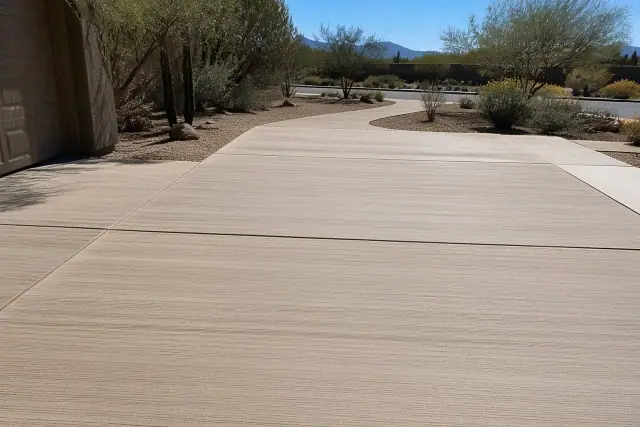
Broom-finish concrete overlay on a residential driveway in Tucson, AZ, with Sonoran desert landscaping in the background.

Broom-Finish Overlays

A broom-finish overlay gives driveways and patios a clean, traditional surface at the lower end of the resurfacing cost range. It is applied as a polymer-modified wear layer after the base is cleaned, profiled, and repaired.

  • Traditional broom texture
  • Suitable for driveways and patios
  • Polymer-modified cement wear layer
  • Uniform finish over cosmetic wear
  • Requires a structurally sound base
Request Estimate
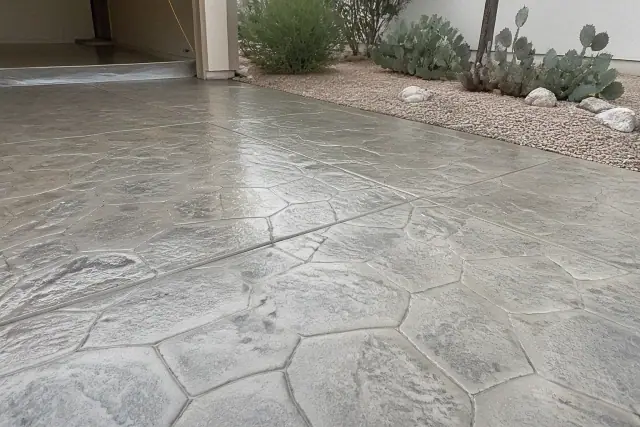
Stamped concrete overlay showing stone patterns with cactus and granite landscaping at a residential site in Tucson, AZ.

Stamped Concrete Overlays

Stamped overlays add a decorative texture across an existing slab after damage and movement are addressed. Available patterns can replicate flagstone, travertine, or brick pavers without replacing the underlying concrete when it remains structurally sound.

  • Flagstone-style patterns
  • Travertine-style patterns
  • Brick-paver patterns
  • Full-surface decorative texture
  • Structural repairs completed first
Request Estimate
Concrete staining progress on a residential patio with a saguaro cactus in the background in Tucson, AZ.

Concrete Staining

Acid- or water-based staining adds color variation without changing the concrete's texture. The existing surface is repaired and prepared first so the selected stain and sealer can be applied to a stable, consistent base.

  • Acid-based stain options
  • Water-based stain options
  • Color variation without added texture
  • Prepared, repaired concrete surface
  • Sealer selected for slab exposure
Request Estimate
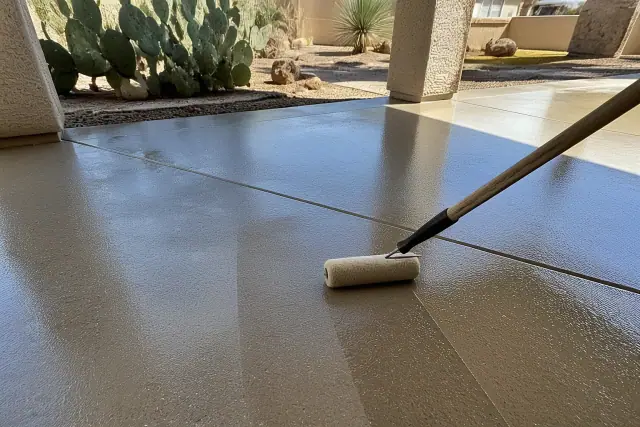
Roller applying a glossy epoxy coating to a concrete floor in a Tucson, AZ worksite with desert plants in the background.

Epoxy Concrete Coatings

Epoxy concrete coatings suit covered patio areas where chemical and stain resistance are priorities. Surface integrity, moisture conditions, and preparation are checked before coating so the system is matched to an appropriate application.

  • Designed for covered patio areas
  • Chemical-resistant finish
  • Stain-resistant surface
  • Moisture conditions evaluated first
  • Thorough surface preparation
Request Estimate
Contractor troweling a micro-topping skim coat onto a damaged concrete walkway in Tucson, AZ.

Micro-Topping Skim Coats

A micro-topping skim coat is a thin polymer-modified cementitious layer, usually 1/8 inch to 1/4 inch thick, that renews a sound but worn surface. It can create a smooth, modern finish on driveways, patios, and interior floors without a full replacement.

  • Thin polymer-modified cement layer
  • Smooth, modern surface finish
  • Pressure-washed before application
  • Light diamond grinding when needed
  • Bonding agent applied to the old surface
Request Estimate
Finding the Right Fit

Choosing the Right Concrete Repair Approach

An isolated crack or spall may only need patching, while broad cosmetic wear can call for resurfacing after repairs are complete. Settlement may require leveling, and slabs with base failure, extensive rebar corrosion, or major displacement may be better candidates for replacement. The recommendation follows an on-site review of the surface, base support, access, and intended finish.

Condition-Based Repair Plan

We determine whether a slab needs an isolated patch, skim coat, full overlay, structural leveling, or replacement before quoting. That condition-based assessment keeps cosmetic work from being placed over active settlement or base failure.

Tucson Material Selection

Repair materials are selected for Tucson's heat cycling, monsoon moisture, and alkaline soil conditions. Polymer-modified overlays, fiber-reinforced patching compounds, flexible joint sealants, and vapor-permeable sealers each serve a different repair condition.

Licensed, Standards-Based Work

Tucson Superior Concrete holds Arizona Registrar of Contractors licensing, and structural repairs follow American Concrete Institute guidance for preparation and bond strength. When permits apply, the work is coordinated through the appropriate City of Tucson or Pima County development service.

What Sets Us Apart

Why Choose Us for Concrete Repair & Resurfacing?

Our work covers residential properties in established neighborhoods such as Sam Hughes and Barrio Viejo, new-construction slabs toward Dove Mountain and Vail, and commercial flatwork where downtime matters. We inspect first, explain the repair-versus-replacement decision, and provide dated invoices and before-and-after photos for sidewalk and walkway work.

Request an Assessment

Surface Cracks

Surface cracks under 1/4 inch wide with no vertical displacement may be suitable for repair and resurfacing. Cracks wider than 1/2 inch or those with vertical offset point to settlement that should be evaluated for leveling before cosmetic work begins.

Spalling and Pitting

Flaking, pitting, and scaling can begin as surface wear, but deeper spalling may expose embedded reinforcement. Repair requires removing loose material, checking the rebar or wire mesh, and rebuilding only after sound concrete is reached.

Sunken or Uneven Slabs

Caliche and expansive clay do not always compact uniformly, while irrigation runoff can wash support away and fill soil can settle unevenly. Driveways, pool decks, patios, and entry slabs may sink or heave as those conditions change beneath them.

Efflorescence and Discoloration

Efflorescence is the white mineral bloom left when moisture wicks salts to a concrete surface, a common patio issue near irrigated landscaping beds. Staining, fading, and a rough texture can also indicate that the wear layer or sealer needs attention.

Root and Joint Damage

Driveways often develop shrinkage cracks from control joints, edge spalling where monsoon runoff pools at the garage apron, or diagonal cracks from tree-root intrusion. Mature mesquite and palo verde trees close to older slabs are a recurring source of that root pressure.

Worn Coatings and Sealers

Tucson receives roughly 300 days of sunshine a year, and sustained UV exposure can break down decorative coatings and sealers. Once protection wears thin, monsoon moisture can enter exposed cracks and accelerate surface deterioration.

How It Works

Our Concrete Repair & Resurfacing Process

A durable repair depends on identifying the cause, preparing the surface, and matching the material and finish to the slab. The process moves from inspection through repair and finishing without covering active structural problems.

01.

Inspect the Slab and Site

We walk the property, check crack width and vertical movement, look for spalling or exposed reinforcement, and review access, drainage, traffic, and the desired finish before quoting.

02.

Diagnose the Damage Source

The evaluation distinguishes surface wear from base failure, active settlement, root pressure, irrigation washout, moisture movement, and poor original sub-base compaction. That diagnosis determines whether repair, leveling, resurfacing, or replacement is appropriate.

03.

Clean and Profile the Surface

Loose or deteriorated material is removed before the slab is pressure-washed and profiled. Diamond grinding may be used to expose a stable surface, improve the profile, or prepare interior concrete for restoration.

04.

Complete Structural Repairs

Cracks are routed and sealed, spalls are rebuilt after reinforcement treatment, and settled panels are leveled when needed. Bonding agents and repair compounds are selected for the prepared concrete and the movement or load the repair must handle.

05.

Apply the Selected Finish

Once repairs are stable, the selected broom, stamped, stained, epoxy, or micro-topping finish is applied to the prepared slab. The method is matched to exterior exposure, covered use, traffic, texture, and appearance goals.

06.

Cure, Seal, and Document

The finished surface receives the sealer suited to its exposure and is allowed to cure for the selected material. For sidewalk and walkway work, dated invoices and before-and-after photos document the repaired condition.

Plan Your Repair

Schedule a Concrete Repair & Resurfacing Consultation

If a cracked driveway apron, sunken patio, uneven walkway, or worn slab is raising questions, request an on-site assessment. Tucson Superior Concrete will review the damage, explain the practical options, and prepare a quote based on the surface condition and finish you choose.

Concrete Repair Help

Concrete Repair & Resurfacing FAQs

These answers cover common Tucson questions about resurfacing costs, skim coats, repair limits, finish options, slab leveling, and maintenance. A site inspection is still needed to confirm whether the existing concrete is stable enough to repair or resurface.

Call Our Experts

In Tucson, standard broom-finish or overlay resurfacing generally runs $3 to $10 per square foot, while stamped or stained decorative work runs $6 to $20 per square foot. An average-sized patio often totals between $1,236 and $1,779, though source examples range from $423 for a small patch to $3,295 or more for larger detailed overlays. Square footage, existing damage, finish, preparation, and site access all affect the quote.

Yes, when the existing slab is structurally sound and free of active settlement or base failure. The old surface is cleaned, profiled, and treated with a bonding agent before a polymer-modified skim coat, typically 1/8 inch to 1/4 inch thick, is applied. Unstable, cracked, or delaminating concrete must be repaired or addressed first.

Resurfacing is often a practical choice for cosmetic wear, surface-level damage, minor cracking, and discoloration when the base remains sound. It avoids demolition and repouring while giving the slab a new wear layer. It is not the right treatment for structural cracking, major settlement, or base failure.

Concrete resurfacing lasts an average of about eight years, with a general range of five to 12 years based on installation, traffic, and maintenance; some properly maintained surfaces reach 15 years or more. Structural repairs have been documented lasting as long as 52 years in some cases, yet roughly 20% of repairs nationally fail within the first five years when preparation or material selection is poor. In Tucson's climate, resealing every two to three years is the strongest maintenance step for extending a resurfaced slab's service life.

A standard Tucson driveway resurfacing finish generally costs about $3 to $10 per square foot, while decorative stamped or stained work can reach $20 per square foot. A typical two-car driveway often totals about $1,200 to $3,000 depending on size, existing damage, crack repair, base preparation, finish, and equipment access. An itemized site-specific quote shows which factors apply.

The phrase usually describes a basic cement resurfacer or DIY patching compound used as a low-cost alternative to a professional overlay or replacement. Without proper profiling, bonding agents, and curing, these fixes may fail within a year or two under Tucson's UV exposure and heat cycling. Failed patch material may then need to be removed before a durable repair can begin.

The right material depends on the slab and its use. Polymer-modified cementitious overlays suit durable exterior surfaces, micro-toppings and self-leveling underlayments suit smooth interior floors, and fiber-reinforced repair mortars suit structural patches and spalls. Surface preparation and sealer selection matter as much as the overlay itself.

Repair corrects isolated damage such as a crack, spall, or settled corner. Resurfacing adds a new finish across the whole slab to address broad cosmetic wear, minor cracking, discoloration, or rough texture. Structural repairs are often completed before resurfacing so the finish is placed over a stable base.

Replacement is considered when inspection finds base failure, extensive rebar corrosion, structural cracking, or cracks wider than 1/2 inch with vertical displacement. Resurfacing cannot correct an unstable slab underneath. Leveling may still be an option for some settlement conditions, so the base and slab thickness should be evaluated first.

Often, yes. Cement-based mudjacking can raise a slab with slurry, while polyurethane injection uses lightweight expanding structural foam through small holes. Soil conditions, slab thickness, and the condition of the concrete determine whether lifting is appropriate and which method fits.

Minor lips can be ground with diamond concrete equipment, while larger displacement may require lifting, releveling, or replacing the panel. Public-facing walkways, ramps, and accessible routes also need appropriate slope, cross-slope, and surface continuity. Work touching the public right-of-way may require coordination with the City of Tucson Department of Transportation and Mobility.

Patio options include broom-finish overlays, stamped patterns that replicate flagstone, travertine, or brick pavers, acid- or water-based stains, and smooth micro-topping skim coats. Epoxy coatings are another option for covered patios needing chemical and stain resistance. The slab's stability and exposure should be checked before selecting a finish.

Tucson Superior Concrete provides concrete repair and resurfacing throughout Tucson, Oro Valley, Marana, Sahuarita, and the surrounding Pima County metro area. The team works on residential properties, commercial flatwork, driveways, patios, sidewalks, pool decks, and interior slabs within that supported service area.