Proudly serving Tucson, Oro Valley, Marana, Sahuarita, Green Valley, Vail & surrounding areasCall or Text 24/7: 520-699-3263

Concrete Driveway and Patio Installation for Catalina Foothills, AZ

Tucson Superior Concrete installs concrete driveways, patios, and stamped concrete for homeowners and property managers throughout Catalina Foothills. Our services also include sidewalks and walkways, slabs, foundations and footings, repair and resurfacing, sealing and maintenance, pool decks, and demolition and removal. We plan each project around the intended use, site access, finish, and existing grade. Clients can request a free estimate for residential or commercial concrete work.

Foothills properties can combine decomposed granite, caliche hardpan, expansive clay, steep grades, monsoon runoff, and intense UV exposure. We evaluate soil, drainage, and load requirements before recommending slab thickness, reinforcement, or surface treatment. Our licensed and insured crews follow Arizona Registrar of Contractors requirements and American Concrete Institute guidance for mix design, curing, and jointing. That local planning helps reduce premature cracking, settlement, and weather-related surface damage.

Catalina Foothills is an unincorporated Pima County community of roughly 50,800 residents across rolling terrain south of the Santa Catalina range. We work near Sabino Canyon, Ventana Canyon, Skyline Country Club, La Encantada, Finger Rock, Sunrise, and the Kolb Corridor. Call before monsoon season to plan a new pour, replacement, or resurfacing project.

★ ★ ★ ★ ★4.9/5 Average Rating - 20+ Years of Experience - Catalina Foothills Concrete Contractor Specialists - Residential & Commercial
Concrete Services
Concrete Services in Catalina Foothills, AZ

Choose the service that fits the surface, load, drainage, and finish requirements of your property. We serve foothills neighborhoods and adjacent communities; clients coordinating work at a second property can also review concrete service in Casas Adobes, AZ .

Concrete Driveway Installation

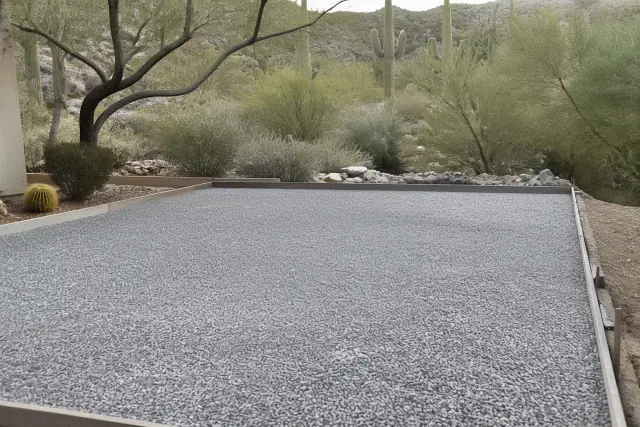
Gravel base prepared for a concrete driveway installation in Catalina Foothills, AZ.

We excavate and compact a 4 to 6 inch aggregate base, then pour a minimum 4 inch slab for passenger vehicles. Areas carrying trucks, RVs, or boat trailers may need 5 or 6 inches plus rebar or wire mesh. Local driveway projects typically run $3,900 to $7,300, with regional pricing of $8 to $20 per square foot depending on size, finish, and access.

Explore Service

Concrete Patio Installation

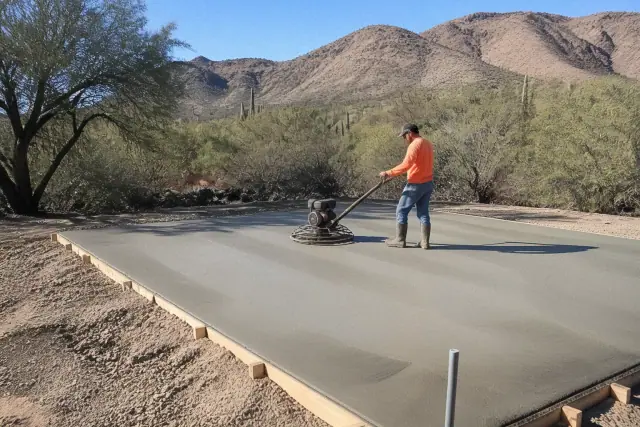
Worker using a power trowel to smooth fresh concrete on a patio project in Catalina Foothills, AZ.

Patios are poured at a minimum 4 inch thickness with control joints planned for seasonal soil movement. A minimum 2 percent slope carries monsoon runoff away from the home. Broom, exposed aggregate, salt, and stamped finishes can coordinate with nearby driveways or pool decks.

Explore Service

Stamped Concrete

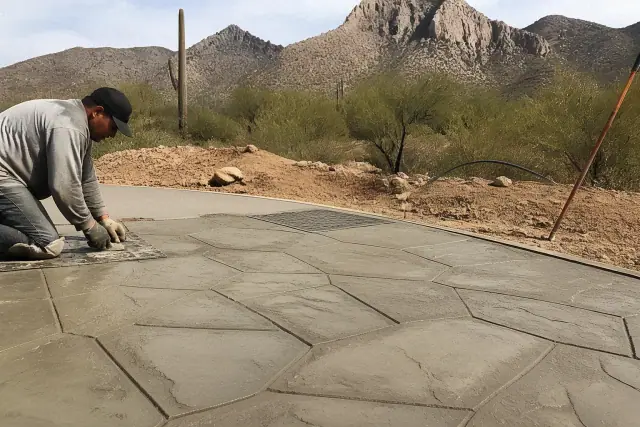
Stamped concrete with stone patterns on a jobsite in Catalina Foothills, AZ, featuring desert mountains in the background.

Texture mats, color hardener, and release agent can reproduce flagstone, brick, or travertine character in concrete. A stamped driveway typically costs 15 to 20 percent more than a plain broom finish. Sealing after cure matters because intense UV exposure can fade unsealed color hardener within a season or two.

Explore Service

Concrete Sidewalks & Walkways

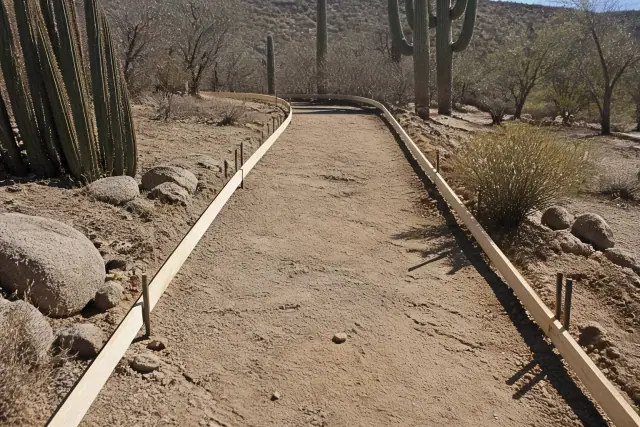
Wooden sidewalk forms secured by metal stakes on a desert construction site in Catalina Foothills, AZ.

We form sloped walkways at a minimum 4 inches thick and place control joints every 4 to 6 feet to manage thermal movement during 100-plus degree summers. Broom finish provides slip resistance, while exposed aggregate or stamped accents can match other hardscape.

Concrete Slab Installation

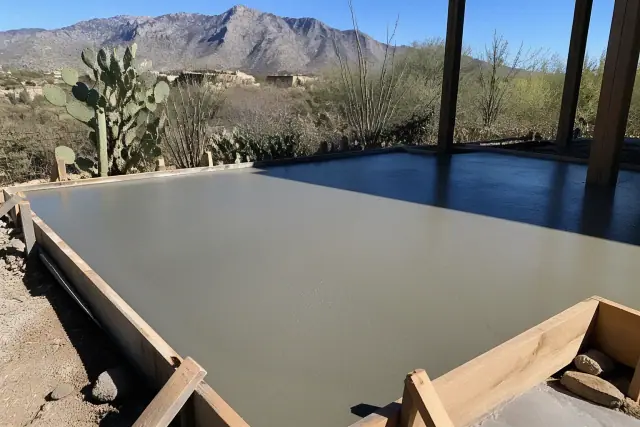
Wet concrete slab in wooden frames with a desert mountain backdrop in Catalina Foothills, AZ.

Casita, workshop, and storage-building slabs typically run 4 inches for light-duty use and 5 to 6 inches with reinforcement for heavier loads. We evaluate caliche and trapped moisture before deciding whether the site needs more excavation or base material.

Concrete Foundations & Footings

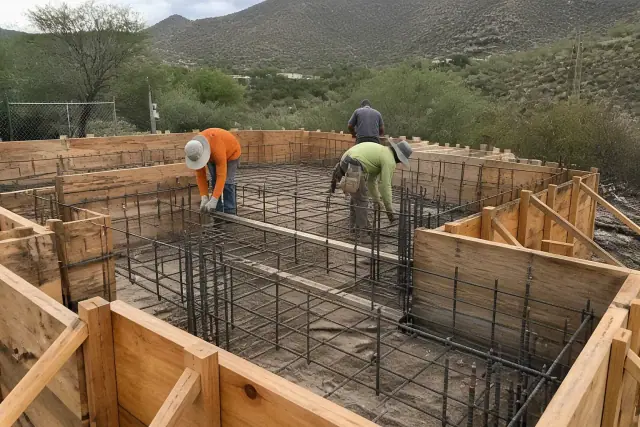
Steel rebar cage installation within wooden foundation forms at a jobsite in Catalina Foothills, AZ.

Foundation and footing work begins with soil evaluation, proper subgrade compaction, formwork, and reinforcement suited to the structure. Mix design and curing are adjusted for regional heat and site conditions, including commercial foundation work for tenant improvements.

Concrete Repair & Resurfacing

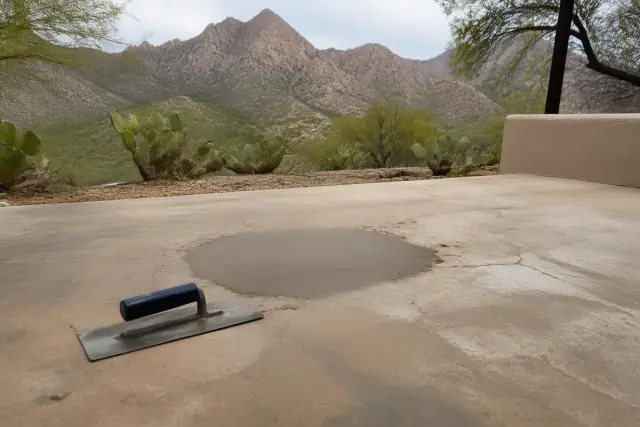
Trowel smoothing bonding compound into a concrete repair patch on a patio in Catalina Foothills, AZ.

We assess settlement cracks, spalling, and surface pitting before choosing an overlay, grinding, or full slab replacement. When the underlying base remains sound, resurfacing can extend the usable life of a driveway or patio by 10 to 15 years.

Concrete Sealing & Maintenance

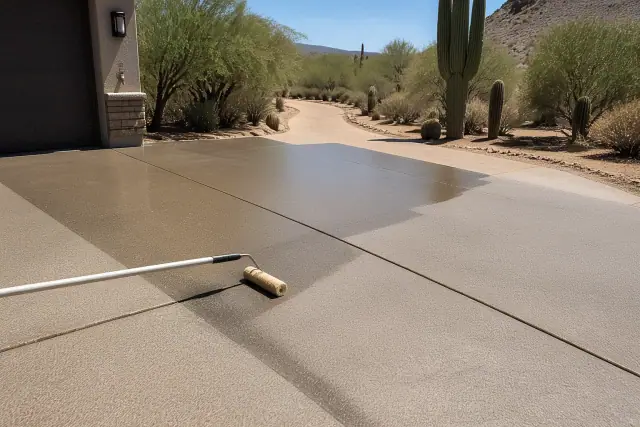
A roller brush applying transparent concrete sealer to a driveway in Catalina Foothills, AZ.

Unsealed concrete can show accelerated wear and color fade within 2 to 3 years under local UV and monsoon exposure. We recommend resealing driveways and patios every 2 to 3 years, with periodic pressure washing for caliche dust, mineral deposits, and organic staining.

Concrete Pool Decks

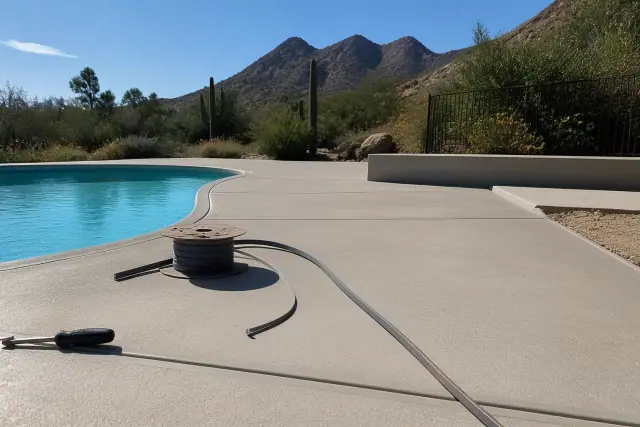
Concrete pool deck with precision expansion joints in front of Sonoran Desert mountains in Catalina Foothills, AZ.

Pool decks need a comfortable, slip-conscious finish when bare feet can meet 115-degree surface temperatures in July. Cool-deck coatings, exposed aggregate, and light-colored stamped finishes reduce surface heat compared with standard gray concrete, while planned slope and control joints protect the area around the pool shell.

Concrete Demolition & Removal

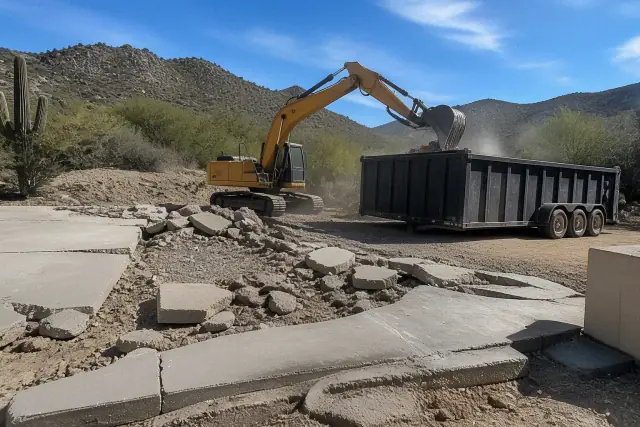
Heavy machinery breaking old concrete and loading rubble into a container at a jobsite in Catalina Foothills, AZ.

Replacement projects can include demolition and removal of existing concrete, asphalt, or unsuitable base material. Clearing the failed surface lets us inspect the subgrade, correct drainage or compaction issues, and prepare a stable base for the new pour.

Project Planning

How to Choose Concrete Options in Catalina Foothills

The right concrete plan depends on soil, grade, drainage, vehicle or structural loads, finish preferences, and long-term maintenance. Permits, HOA review, seasonal weather, and access should be resolved before the pour is scheduled.

Soil and Grade Assessment

Foothills lots can shift 10 to 20 feet in grade across a single property and vary between decomposed granite, caliche hardpan, and expansive clay. Testing and access planning guide excavation depth, compaction, formwork, and drainage design.

Load-Based Slab Thickness

Passenger driveways, heavy-vehicle areas, workshops, and foundations place different demands on the slab. We evaluate expected loads before recommending thickness and whether rebar or wire mesh belongs in the design.

Drainage and Slope Planning

Driveways, patios, and walkways must move monsoon runoff away from foundations and toward approved drainage paths. Steeper lots may require more detailed grading and formwork than flatter Tucson properties.

Climate-Aware Scheduling and Curing

Warm-season pours are scheduled for early morning, often before sunrise, so the concrete reaches critical initial set before peak heat. Overnight lows near freezing in December and January can slow curing, so mix design and cure time change with the season.

Finish and Maintenance Plan

Broom and float finishes emphasize slip resistance, while exposed aggregate, stamping, integral color, acid staining, and scored patterns support a Southwest architectural look. The selection should account for surface temperature, UV exposure, cleaning, and future sealing.

Permits and HOA Review

Pima County Development Services handles permits when project scope, drainage, or right-of-way work requires them. Gated communities may separately review color, finish, and joint patterns, so we include HOA design requirements in estimating and scheduling.

Foothills Concrete Issues

Common Concrete Problems on Foothills Properties

Soil movement, steep runoff paths, heat, monsoon rain, and UV exposure can damage concrete before or after it cures. Identifying the cause determines whether the solution is better drainage, base correction, resurfacing, sealing, or replacement.

Request Concrete Assessment

Caliche and Expansive Soil

Caliche layers can trap moisture, while expansive clay pockets move as moisture conditions change. Without adequate excavation, drainage, and compaction, those conditions can contribute to premature slab cracking and settlement.

Steep Grades and Runoff

Rolling lots change how forms, access, and drainage paths are laid out. Water must leave driveways, patios, and walkways without collecting beside foundations or washing across newly placed concrete.

Heat-Driven Moisture Loss

Fresh concrete surfaces can exceed 140 degrees in summer, accelerating moisture loss and increasing plastic-shrinkage risk. Curing compound or wet curing may need to begin within the first hour after finishing.

Monsoon Damage to Fresh Concrete

Monsoon season runs roughly July through September and can bring an inch of rain in under an hour. Rain hitting concrete before initial set may pit, discolor, or structurally compromise the surface, so forecasts influence every pour date.

Cracks, Spalling, and Settlement

Settlement cracks, spalling, and surface pitting can come from soil movement, weak base preparation, weather exposure, or deeper slab failure. We evaluate damage depth before recommending grinding, an overlay, or removal and replacement.

UV Fade and Surface Wear

Intense UV radiation and monsoon moisture accelerate color fade, staining, and surface wear. Regular cleaning and timely sealing help protect plain and decorative concrete from caliche dust, mineral deposits, and organic staining.

Why Choose Us

Why Choose Tucson Superior Concrete in Catalina Foothills?

Our approach combines licensed and insured concrete work with practical knowledge of foothills soil, grade, weather, and design expectations. We coordinate local mix specifications, base preparation, jointing, permits, and HOA requirements around the property rather than applying one generic plan.

Licensed and Insured Concrete Work

Our crews hold current licensing through the Arizona Registrar of Contractors, and our insurance coverage protects the property during the project. We follow applicable requirements for residential and commercial concrete work.

Foothills Lot Experience

Experience near Sabino Canyon Recreation Area, Ventana Canyon, golf-course communities, historic adobe-style homes, and newer custom builds informs how we plan site access and preparation. We account for design standards as well as how each lot behaves.

Region-Specific Mix and Jointing

We source ready-mix from suppliers serving greater Tucson and specify the mix, base depth, curing approach, and joint pattern for regional heat and soil. That calibration is intended to support a driveway that lasts three decades rather than one that cracks within five years.

Project Steps

Our Concrete Installation Process in Catalina Foothills

Every driveway project begins with a site visit and free estimate covering grade, soil, drainage, access, intended loads, and design requirements. From there, we coordinate approvals, preparation, placement, finishing, curing, and sealing in a consistent sequence.

01.

Site Evaluation and Estimate

We inspect the existing grade, soil conditions, runoff patterns, access, expected loads, and any HOA design requirements. The findings shape a written estimate and recommended scope.

02.

Permits, Demolition, and Excavation

When required, we coordinate permitting through Pima County Development Services. Existing concrete, asphalt, and unsuitable base material are removed before excavation reaches the proper subgrade.

03.

Base Preparation and Formwork

The subgrade is prepared and a 4 to 6 inch aggregate base course is compacted for driveway work. Forms establish the final dimensions, slope, drainage path, and joint layout.

04.

Reinforcement and Concrete Placement

Rebar or wire mesh is placed when the load and design call for reinforcement. Concrete is then poured at the planned thickness for passenger vehicles, heavy-load areas, patios, slabs, or structural work.

05.

Finish, Joints, and Weather-Aware Curing

The crew applies the specified broom, stamped, exposed-aggregate, or decorative finish, then cuts control joints on schedule. Curing methods and timing are adjusted for heat, monsoon forecasts, and winter temperatures.

06.

Sealing and Final Walkthrough

A standard driveway usually takes 1 to 2 days for forming and pouring, followed by a 5 to 7 day cure period before vehicle traffic; full cure strength develops over 28 days. The final sealing application protects against UV and moisture, and we review the finished scope with the client. If work falls short of the agreed scope, we address it directly.

Project Applications

Concrete Planning for Homes & Businesses

Case Study 1: Sloped Residential Driveways: Long setbacks, circular drives, and heavy-vehicle parking call for load-based thickness, stable base preparation, and drainage that follows the lot.

Case Study 2: Patios and Pool Decks: Surface temperature, barefoot comfort, slip resistance, architectural finish, and runoff direction guide the selection.

Case Study 3: Commercial Access Areas: Parking areas, sidewalks with ADA slope requirements, and foundations for tenant improvements require clear load, grade, and access planning.

Plan Your Concrete Project

Request a Catalina Foothills
Concrete
Estimate

Tell us whether you are planning a driveway, patio, pool deck, slab, repair, or another supported concrete project. We will review site access, soil, grade, drainage, finish, and expected loads before preparing a free written estimate.

Concrete Project Help

FAQs About Concrete in Catalina Foothills, AZ

Review common questions about driveway cost, slab and base thickness, finishes, curing, maintenance, repair, permits, and local service coverage. For advice tied to your property, request a site visit and written estimate.

Call Tucson Superior Concrete

A driveway around 200 square feet may cost roughly $1,600 to $4,000 at regional pricing of $8 to $20 per square foot. A basic broom finish is generally toward the lower end, while stamped or decorative work, extra base preparation, demolition, and difficult access can raise the total. We provide a written estimate after evaluating the property.

A 20x40 driveway covers 800 square feet and typically runs between $6,400 and $16,000 at regional rates of $8 to $20 per square foot. Finish, reinforcement, demolition, site access, and steeper grading move the estimate within that range. A site visit is the best way to price a specific foothills lot.

Four inches is the standard minimum for a residential driveway carrying passenger vehicles when it sits on a properly compacted 4 to 6 inch aggregate base. Driveways that regularly carry trucks, RVs, or boat trailers may need 5 to 6 inches with rebar or wire mesh. We assess expected loads before recommending thickness.

A structurally sound driveway may accept a stamped overlay, epoxy coating, concrete pavers over a prepared base, or decorative acid stain. If the slab has significant cracking or settlement, covering it can hide rather than solve the problem. We inspect the base and damage depth before recommending resurfacing or replacement.

We compact 4 to 6 inches of aggregate base course beneath driveway pours and adjust the preparation for the soil found on the lot. Caliche and expansive clay can require added excavation or base material to create stable, well-draining support. Proper base compaction is central to reaching the expected 25 to 30 year service life of correctly installed concrete.

We recommend resealing driveways and patios every 2 to 3 years under Catalina Foothills UV and monsoon exposure. Sealing helps limit stains, surface pitting, and color loss, especially on stamped concrete with color hardener. Periodic pressure washing should remove caliche dust, mineral deposits, and organic staining before resealing.

Permit requirements depend on the scope, location, drainage impact, and right-of-way work, with Pima County Development Services handling permitting in unincorporated Catalina Foothills. HOA design review may be a separate requirement in gated communities. We identify both needs during the initial site visit and include them in the project timeline.

A standard driveway usually takes 1 to 2 days for forming and pouring. The surface typically needs a 5 to 7 day cure period before it handles vehicle traffic, although full cure strength develops over 28 days. Weather and mix design can change the schedule, so follow the project-specific guidance.

Concrete poured and cured for the local climate can last 25 to 30 years with routine upkeep. Professionally installed slabs with consistent sealing and maintenance can reach 30 to 50 years of service life. Soil preparation, drainage, load, jointing, weather during placement, and maintenance all influence the result.

Options include stamped patterns, integral color, acid staining, saw-cut scoring, exposed aggregate, salt finish, and designs that combine concrete with pavers or aggregate borders. Stamping can mimic flagstone, brick, or travertine, while lighter finishes can be useful around pools. All decorative work still needs the same sound base preparation, thickness, and curing plan as standard concrete.

Fresh-concrete surface temperatures can exceed 140 degrees in summer, causing fast moisture loss and plastic-shrinkage risk. Warm-season pours often start early, sometimes before sunrise, and curing compound or wet curing may be applied within the first hour after finishing. The goal is to protect the critical initial set before peak heat.

Monsoon season runs roughly July through September and can produce an inch of rain in under an hour. Rain before initial set may pit, discolor, or structurally compromise fresh concrete. We track forecasts and adjust pour schedules rather than risk an exposed surface.

Cool-deck coatings, exposed aggregate, and light-colored stamped finishes can reduce surface heat compared with standard gray broom-finished concrete. That matters when bare feet can meet 115-degree surfaces in July. Proper slope away from coping and control-joint placement are also part of the pool-deck plan.

Resurfacing overlays or grinding can make sense when damage is at the surface and the underlying base remains sound. In that situation, resurfacing may extend usable life by 10 to 15 years and costs a fraction of full replacement. Significant cracking or settlement usually calls for removal and replacement rather than covering a compromised slab.

We work around Sabino Canyon, Ventana Canyon, Skyline Country Club, Sunrise, the Kolb Corridor, La Encantada, River Road, Finger Rock, and the Coronado National Forest boundary. Service also extends to Oro Valley, Casas Adobes, and the broader northeast Tucson metro area. Project access and preparation are adjusted to the grade and property conditions.