Proudly serving Tucson, Oro Valley, Marana, Sahuarita, Green Valley, Vail & surrounding areasCall or Text 24/7: 520-699-3263

Tucson Superior Concrete: Concrete Driveway Installation, Concrete Patio Installation, Stamped Concrete in Tucson, AZ

Tucson Superior Concrete serves homeowners and businesses across the Tucson metro area with concrete built for local conditions. Our core work includes concrete driveway installation, concrete patio installation, and stamped concrete for practical or decorative outdoor surfaces. We also install sidewalks, walkways, slabs, foundations, footings, and pool decks, then handle repair, resurfacing, sealing, maintenance, demolition, and removal when existing concrete needs attention.

Caliche layers, expansive soil pockets, monsoon runoff, and triple-digit summer heat all affect how concrete should be prepared, placed, and cured in the Tucson basin. As a locally owned, bonded, and insured contractor, we follow American Concrete Institute placement and curing standards and work with the City of Tucson or Pima County permitting departments when a project requires approval. Each project is planned around drainage, reinforcement, finish, and the actual conditions beneath the slab.

Your written estimate identifies the scope, mix strength, reinforcement, and finish before the pour begins.

★ ★ ★ ★ ★4.9/5 Average Rating · 20+ Years of Experience · Thousands of Customers Helped · Licensed & Insured · Residential & Commercial

Locally Prepared

Free Written Estimate
Bonded & Insured
ACI-Guided Placement
Locally Owned
Concrete Project Options

Concrete Services for Tucson Properties

From new flatwork and structural pours to resurfacing and removal, each service is scoped for the property's loads, drainage, soil, access, and preferred finish.

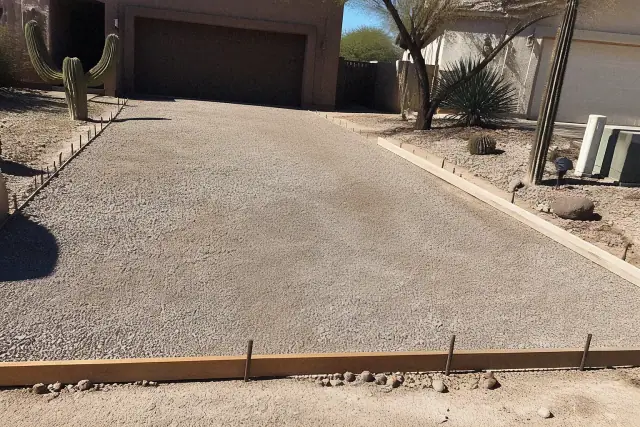
Concrete Driveway Installation

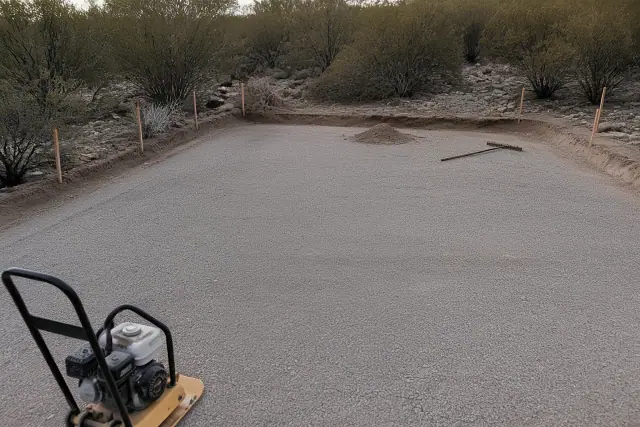
Concrete driveway subgrade preparation with gravel and steel reinforcement at a residential site in Tucson, AZ.

Residential and commercial driveways are planned around compacted base, load needs, drainage, reinforcement, and control joints. Finish options include broom, exposed aggregate, and colored concrete, while failed slabs can be evaluated for repair, resurfacing, or replacement.

Explore Service

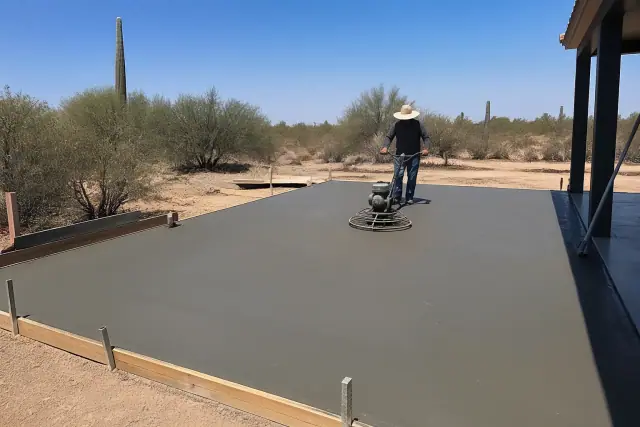
Concrete Patio Installation

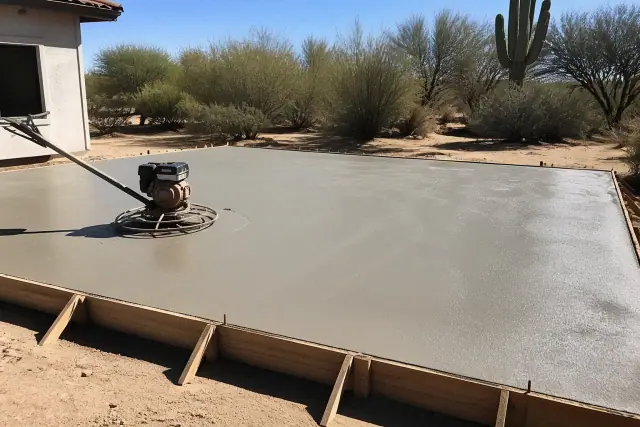
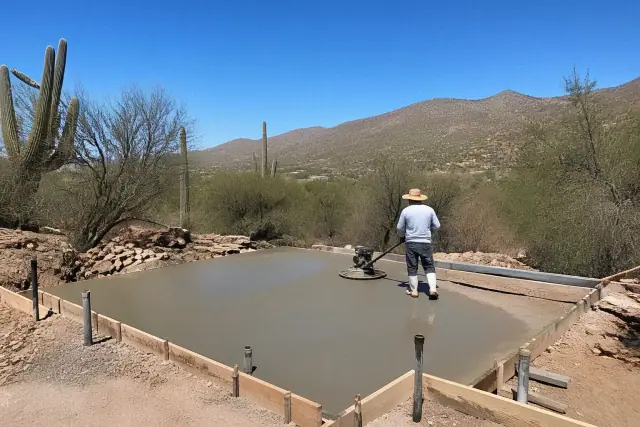
Worker using a power trowel to smooth fresh concrete on a patio installation project in Tucson, AZ.

Patios are designed around landscaping, shade structures, pool traffic, and a drainage fall typically no less than one-quarter inch per foot away from the foundation. Installation includes excavation, base preparation, forming, reinforcement, and a finish selected for appearance and slip resistance.

Explore Service

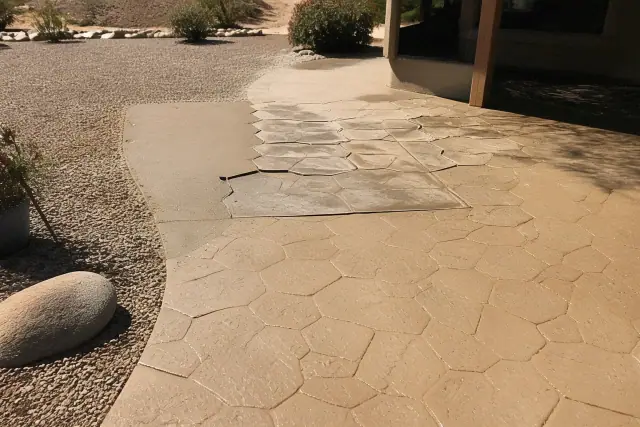
Stamped Concrete

Stamped concrete with a stone pattern partially imprinted in a residential yard in Tucson, AZ.

Slate, cobblestone, wood-plank, and ashlar-cut patterns can recreate the character of flagstone, brick, or travertine. Integral color, color hardener, and acid stain allow the finished surface to complement Sonoran Desert landscaping and stucco exteriors.

Explore Service

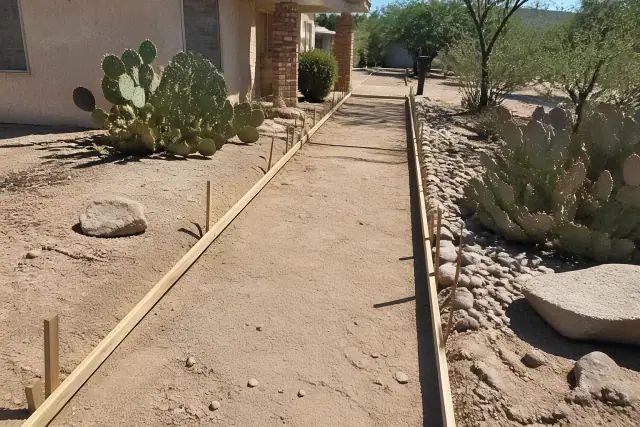
Concrete Sidewalks & Walkways

Concrete sidewalk forms with wooden stakes and prickly pear cactus landscaping in Tucson, AZ.

Pathways are commonly poured at a standard 4-inch depth with a broom finish for traction, with city right-of-way specifications followed where sidewalks meet public streets. Commercial and multi-family work can include ADA-compliant ramps, landings, and cross-slopes.

Concrete Slab Installation

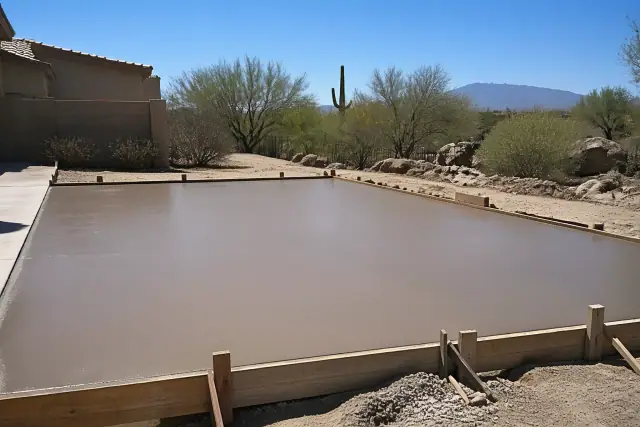
Freshly poured concrete slab inside wooden frames at a jobsite in Tucson, AZ.

Shed pads, garage slabs, and monolithic foundations begin with base preparation, moisture-barrier planning, and rebar or wire-mesh reinforcement. Done correctly, those fundamentals can separate a slab that serves for 50 years from one that cracks in five.

Concrete Foundations & Footings

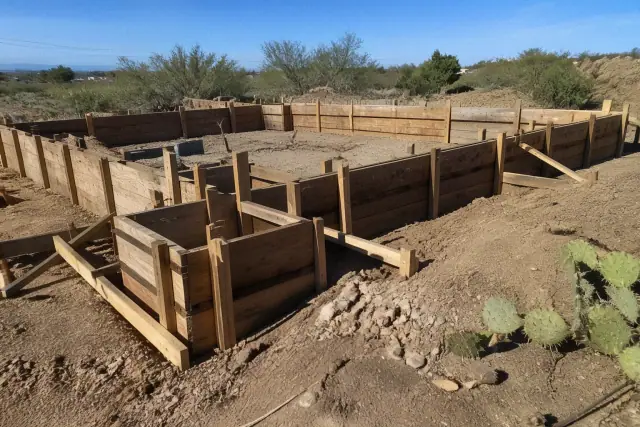
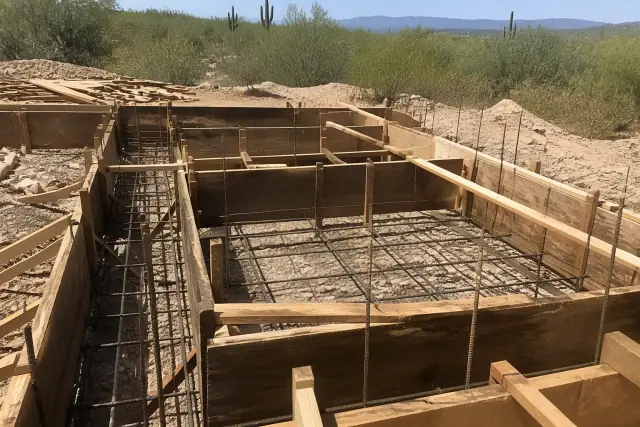
Concrete foundation forms with reinforcement bars at a construction site in Tucson, AZ, surrounded by desert landscape.

Foundation slabs and footings are planned for the site's expansive clay pockets, hard caliche layers, load requirements, and drainage. Footing depth and reinforcement are adjusted to actual soil conditions instead of relying on a single generic specification.

Concrete Repair & Resurfacing

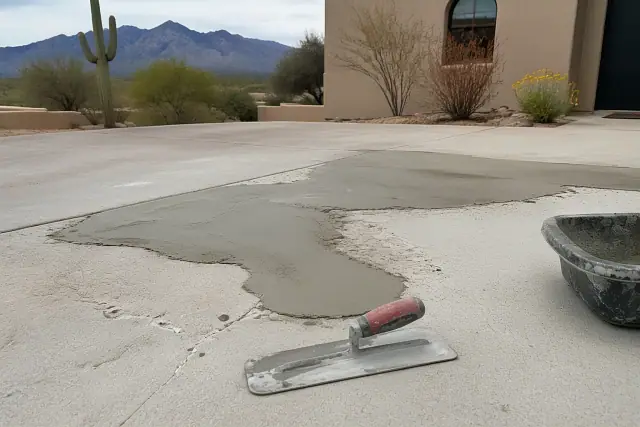
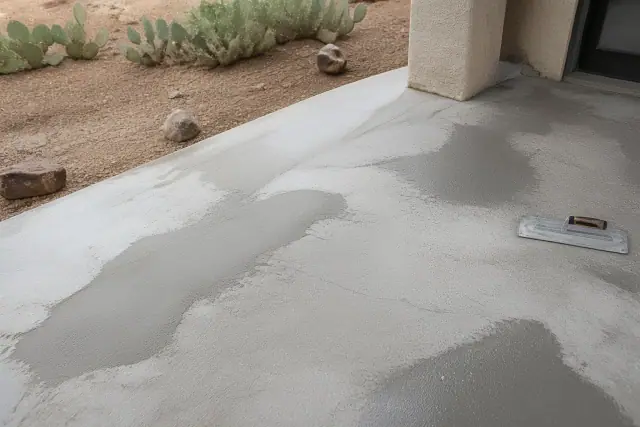
A contractor troweling bonding compound to repair a pitted concrete driveway in Tucson, AZ with desert mountains behind.

Moving cracks can be routed and filled with semi-rigid epoxy or polyurethane sealant after the underlying moisture or soil issue is assessed. For worn or spalled surfaces, a bonded overlay typically 1/4 to 3/4 inch thick can renew the finish without removing a sound structural slab.

Concrete Sealing & Maintenance

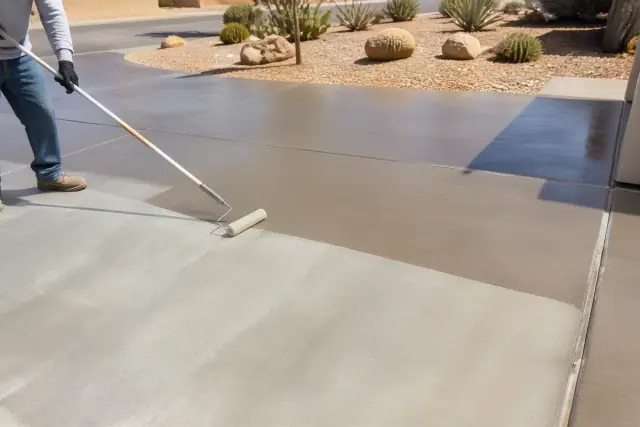
A contractor uses a roller to apply clear sealant to a concrete surface at a residential property in Tucson, AZ.

A penetrating sealer applied every 2 to 3 years helps limit water intrusion, efflorescence, alkaline-dust wear, UV fading, and color loss. Maintenance recommendations are matched to the surface, finish, exposure, and traffic.

Concrete Pool Decks

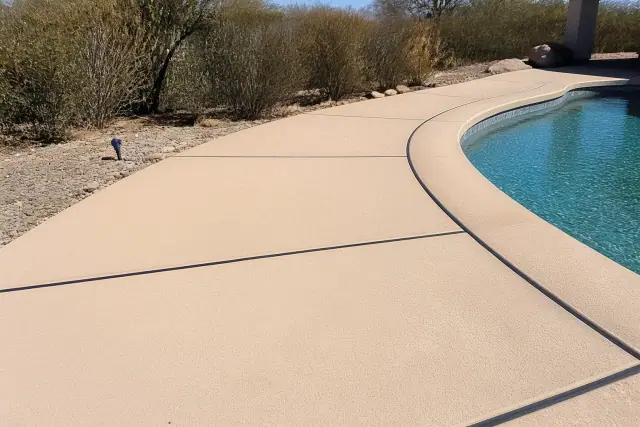
Concrete pool deck with dark flexible expansion joints in a residential backyard in Tucson, AZ.

Pool decks are built with drainage away from the coping and expansion joints that separate deck movement from the pool shell. Knockdown texture, travertine-look stamping, and cool-deck coatings can reduce heat and slip concerns when direct July sun pushes surface temperatures above 140 degrees.

Concrete Demolition & Removal

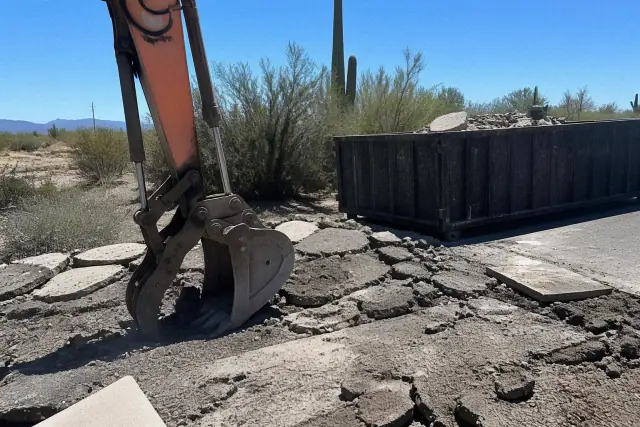
Heavy machinery breaking up old concrete for removal at a desert construction site in Tucson, AZ.

Saw-cutting, hydraulic breakers, and skid-steer equipment create clean removal lines while protecting nearby hardscape, utilities, and irrigation. After demolition, the base is graded and compacted, drainage or soil issues are checked, and broken concrete can be hauled for recycling into aggregate.

Project-Specific Details

Concrete Options Beyond the Basic Pour

Load, finish, drainage, access, soil, and long-term maintenance all shape the right concrete approach. These focused options help align the work with how the surface will actually be used.

Gravel base spread on a leveled site ready for steel grid installation in Tucson, AZ.

Driveway Design and Load Planning

Driveway details are selected for household vehicles, commercial traffic, or repeated fleet loads, with repair decisions based on the slab's condition rather than appearance alone.

  • Residential driveway installation
  • Commercial entries and fleet driveways
  • Compacted aggregate base preparation
  • Control-joint layout for shrinkage
  • Repair textures matched to existing concrete
Fresh concrete surface being smoothed inside wooden forms at a home project in Tucson, AZ.

Patio and Decorative Finish Options

Patio and stamped-concrete choices balance shade, drainage, foot traffic, slip resistance, desert color palettes, and the pace of warm-weather placement.

  • Layouts coordinated with landscaping and shade
  • Steel or fiber reinforcement options
  • Slate, cobblestone, wood-plank, and ashlar patterns
  • Integral color, color hardener, and acid stain
  • Smaller summer pours and adjusted set retarders
Wooden foundation formwork with structural rebar at a construction site in Tucson, AZ.

Structural and Access-Focused Concrete

Structural slabs and accessible routes require careful coordination among soil conditions, reinforcement, moisture control, load demands, slopes, and inspection tolerances.

  • Foundation slabs and reinforced footings
  • Shed pads, garage slabs, and monolithic foundations
  • Moisture barriers, rebar, and wire mesh
  • ADA-compliant ramps, landings, and cross-slopes
  • Mudjacking or polyurethane leveling where appropriate
Contractor troweling bonding compound into pitted flooring during a site repair in Tucson, AZ.

Repair, Protection, and Site Renewal

Existing concrete is evaluated for movement, surface wear, drainage, and structural soundness before choosing repair, protection, resurfacing, or complete removal.

  • Semi-rigid epoxy or polyurethane crack repair
  • Bonded overlays for worn and spalled surfaces
  • Penetrating sealers for UV and moisture exposure
  • Clean saw-cut demolition and hydraulic breaking
  • Concrete recycling into aggregate base material
Concrete Built for Tucson Conditions

Why Tucson Properties Need a Local Concrete Approach

Concrete placement in the Tucson basin must account for caliche, expansive soil pockets, steep temperature swings, rapid summer setting, and monsoon drainage. Local planning helps align the base, mix, reinforcement, finish, and curing approach with those conditions.

Bonded and Insured Contractor

Tucson Superior Concrete is bonded and insured, and its crews are trained to ACI 318 requirements and applicable local amendments. When approval is required, permits are coordinated through City of Tucson Planning and Development Services or Pima County Development Services.

Tucson Soil and Climate Knowledge

Experience across rocky foothill lots near Sabino Canyon and flatter, clay-heavy ground on Tucson's south side informs adjustments to mix design, reinforcement, drainage, and preparation.

Clear Scope and Placement Planning

A written estimate identifies scope, mix strength, reinforcement, and finish before work begins. Placement is coordinated with local ready-mix suppliers so slump and concrete temperature fit Tucson conditions instead of a generic delivery window.

Repair Symptoms Worth Addressing

Common Concrete Problems on Tucson Properties

Cracks, settlement, spalling, poor drainage, excessive surface heat, and undersized pours often point to a deeper issue with the base, soil, water movement, load, or original installation.

Request a Concrete Assessment

Cracking from Soil and Temperature Movement

Caliche, expansive clay pockets, and day-to-night temperature swings can move or shrink concrete. Proper base compaction, reinforcement, and joint planning help manage that movement.

Spalling, Pop-Outs, and Surface Wear

UV exposure, alkaline dust, water intrusion, and a weak surface can leave concrete flaking, pitted, or faded. The slab should be assessed before choosing sealing, resurfacing, or replacement.

Settlement and Uneven Slabs

Base failure, soil movement, or root heave can create uneven panels and trip hazards. Mudjacking, polyurethane foam, panel replacement, or full replacement may be considered based on the cause.

Poor Drainage and Monsoon Runoff

Water moving toward a foundation, pool shell, or slab edge can worsen cracking and soil movement. Slopes, joints, and surrounding drainage should direct monsoon runoff away from vulnerable concrete.

Hot or Slick Pool-Deck Surfaces

A standard smooth finish may hold too much heat or provide too little traction around a Tucson pool. Textured overlays, knockdown finishes, stamping, and cool-deck coatings offer surface-specific alternatives.

Thin or Unreinforced Pours

Cut-rate "poor man's concrete" may lack adequate thickness, reinforcement, base preparation, or the right cement-to-aggregate ratio. It can look acceptable at first yet develop cracking, spalling, and settlement within a couple of years.

How It Works

Our Tucson Concrete Project Process

The process moves from an on-site review and written scope through preparation, placement, finishing, curing, and cleanup, with decisions tied to the surface's use and site conditions.

01.

Site Review and Project Goals

The intended use, traffic or loads, access, drainage, existing landscaping, finish preferences, and visible failure symptoms are reviewed before a solution is recommended.

02.

Written Scope and Estimate

The estimate documents the work area, mix strength, reinforcement, finish, and expected preparation so the planned pour is clear before scheduling.

03.

Excavation and Base Preparation

Existing concrete is removed when needed, then the area is excavated, graded, and compacted. Soil contamination, settlement, and drainage concerns are checked before new work proceeds.

04.

Forms, Reinforcement, and Mix Planning

Forms establish elevation and slope, while steel, fiber, rebar, wire mesh, or moisture barriers are selected for the application. Mix strength, slump, additives, and delivery temperature are coordinated for Tucson conditions.

05.

Placement, Finishing, and Joint Work

Concrete is placed and finished for the required texture and traction. Summer work may use set retarders and smaller pours, while control and expansion joints are positioned for shrinkage and differential movement.

06.

Curing, Cleanup, and Care Guidance

The surface is cured using ACI-guided practices suited to local heat, the site is cleaned, and care recommendations cover protection, sealing, and future maintenance.

Concrete Service Across the Tucson Metro Area

Tucson Superior Concrete works with homeowners, businesses, and property managers across the Tucson basin, from rocky Catalina foothill and Sabino Canyon-area lots to flatter south-side ground and Green Valley.

  • Tucson
  • Tucson Metro Area
  • Tucson Basin
  • Catalina Foothills
  • Green Valley
  • Sabino Canyon Area
  • Tucson South Side
  • City of Tucson
  • Pima County Permitting Areas
  • Tucson Neighborhoods
  • Rocky Foothill Lots
  • Clay-Heavy South-Side Lots
  • Residential Properties Across Tucson
  • Commercial Properties Across Tucson
  • Multi-Family Properties Across Tucson
  • Retail Properties Across Tucson
  • Warehouse Properties Across Tucson
  • Properties from Catalina Foothills to Green Valley
  • Businesses Across the Tucson Metro
A worker uses a power trowel to smooth wet concrete inside wooden forms at a job site in Tucson, AZ.

Honest Feedback from Tucson Concrete Customers

Customer Perspectives
★ ★ ★ ★ ★

Our driveway had settled and the old repair lines stood out. The crew explained why the base and joints mattered, rebuilt the problem area, and matched the broom finish much better than we expected.

AL
Amanda L.Catalina Foothills homeowner
★ ★ ★ ★ ★

We wanted a patio that worked with our shade structure and moved monsoon water away from the house. The options were explained clearly, and the finished slope and texture feel right for the space.

JR
Jason R.Green Valley homeowner
★ ★ ★ ★ ★

Our pool deck was faded, cracked, and uncomfortable in the summer. They walked us through resurfacing choices, repaired the worn areas, and gave the deck a textured finish that feels far more practical.

PS
Priya S.Tucson homeowner
★ ★ ★ ★ ★

We needed an apron and uneven walkway addressed without disrupting the property longer than necessary. The written scope made the load and access requirements easy to understand, and communication stayed clear throughout the job.

MT
Michael T.Tucson property manager
Start With a Clear Scope

Plan Your Next
Concrete
Project

Discuss the surface, load, drainage, finish, and site conditions you need addressed, then receive a written estimate that defines the proposed work.

Tucson Concrete Help

Concrete Project Questions, Answered

These answers cover Tucson pricing factors, mix and slab basics, preparation, repair, maintenance, local conditions, and contractor questions to ask before work begins.

Call About Your Project

Ready-mix concrete in Tucson generally runs between $130 and $166 per yard, depending on mix strength, additives, and the batch plant's distance from the job. Delivery commonly adds $130 to $280 per truckload, and short-load fees may apply when an order does not fill a truck.

"Poor man's concrete" describes a cut-rate mix or undersized pour that may lack adequate reinforcement, slab thickness, base preparation, or the right cement-to-aggregate ratio. It can look acceptable when new but develop cracking, spalling, or settlement within a couple of years.

The price changes with cement and aggregate markets, specified PSI strength, fiber reinforcement or other admixtures, plant distance, and order size. Foundations may require a stronger mix than a standard driveway, while a short load can carry an added fee.

A 1,000-square-foot slab at a standard 4-inch depth requires roughly 12.3 cubic yards of concrete. Total project cost also depends on excavation, base correction, forming, reinforcement, access, finishing, and whether the surface is decorative.

The 4-2-1 rule is a historical field guideline using roughly 4 parts aggregate, 2 parts sand, and 1 part cement by volume. Modern ready-mix work instead uses engineered designs specified for the required PSI strength and application.

Ask about slab thickness, reinforcement, PSI strength, base preparation, control-joint spacing, cure time, permits, bonding, and insurance. The written scope should also explain the finish and what happens if a problem appears after placement.

A compacted, properly graded base supports the slab and helps limit settlement caused by caliche transitions, expansive soil pockets, and water movement. It can be the difference between a slab that serves for decades and one that cracks early.

Residential driveways are installed at a 4-inch minimum slab depth over compacted aggregate base, with control joints cut every 8 to 10 feet for shrinkage management. Commercial entries and fleet driveways often need 5 to 6 inches with reinforcing steel because of repeated heavy loads.

Patio drainage is typically planned at a minimum one-quarter-inch fall per foot away from the home's foundation. Existing landscaping, shade structures, pool areas, and the path of monsoon runoff also affect the final layout.

A penetrating sealer is ideally reapplied every 2 to 3 years, with the exact interval influenced by traffic, exposure, and finish. Sealing helps limit water intrusion, efflorescence, alkaline-dust wear, UV fading, and color loss.

Sometimes. Moving cracks may be routed and filled with semi-rigid epoxy or polyurethane sealant, while a bonded overlay typically 1/4 to 3/4 inch thick can renew a worn or spalled surface when the underlying slab remains sound.

Knockdown texture, travertine-look stamping, and cool-deck coatings can reduce heat and slip concerns compared with a standard trowel finish. That matters because pool-deck surface temperatures can exceed 140 degrees in direct July sun.

Hard caliche layers, expansive clay pockets, monsoon water, UV exposure, and triple-digit summer heat all influence base preparation, drainage, mix behavior, jointing, and curing. Summer stamping may also require set retarders and smaller pours so the surface remains workable.

Some projects require permits through City of Tucson Planning and Development Services or Pima County Development Services. Structural work is planned around ACI 318 requirements and local amendments, while commercial and multi-family walkways may also require ADA-compliant ramps, landings, and cross-slopes.