Six Main Finish Types
Skim coats refresh worn surfaces, epoxy protects interior floors, stamped overlays add decorative depth, pebble aggregate improves wet grip, cool deck lowers surface heat, and microcement creates a nearly seamless finish.
Tucson Superior Concrete explains how skim coats, epoxy coatings, stamped overlays, pebble aggregate, cool deck, and microcement renew structurally sound concrete without a full tear-out. The right choice depends on the slab's condition, the desired finish, traffic, and whether the surface is indoors or exposed to Tucson's heat and monsoon cycles.
Skim coats refresh worn surfaces, epoxy protects interior floors, stamped overlays add decorative depth, pebble aggregate improves wet grip, cool deck lowers surface heat, and microcement creates a nearly seamless finish.
Check structural soundness, surface wear, moisture, traffic, and sun exposure before choosing. A garage coating and a sun-baked driveway need different materials even when both slabs look worn.
Durable results begin with cleaning, crack repair, surface profiling, primer when needed, and the specified coating. Decorative texture, final sealer, routine rinsing, and prompt attention to new hairline cracks help protect the bond.
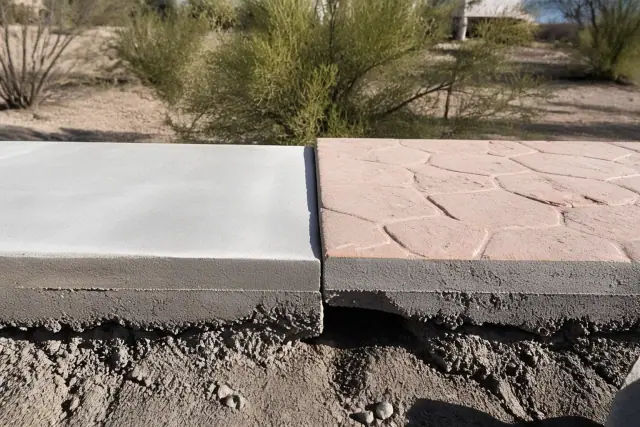
Show a side profile comparing a resurfacing layer generally one-eighth to one-quarter inch thick with an overlay often one-half inch or more. The added overlay depth supports texture and minor grade correction.
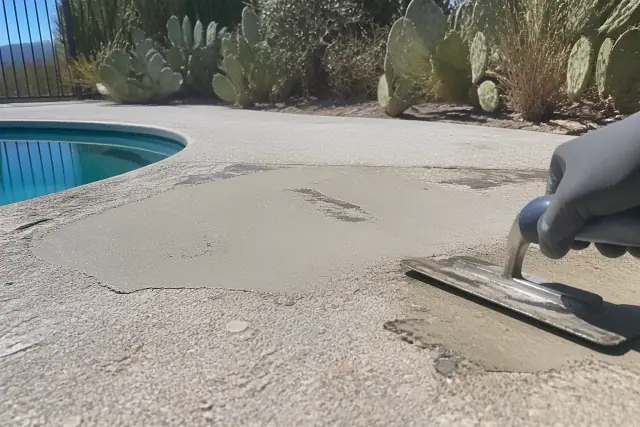
Show the heat-resistant texture of cool deck beside slip-resistant pebble aggregate around a pool. These differences matter through exposed months from May through September and on 100-plus-degree afternoons.
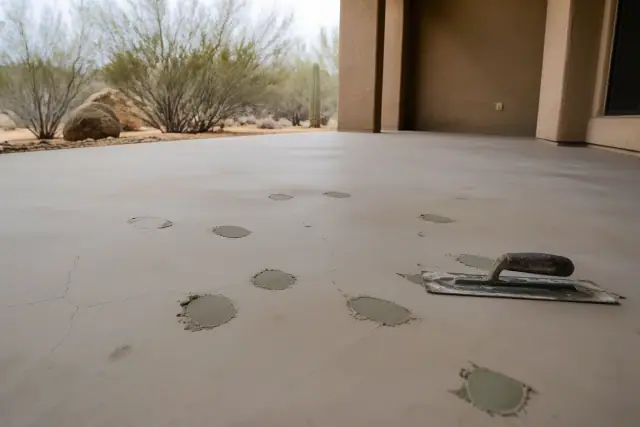
Show epoxy's hard matte or glossy film beside microcement's smooth, almost seamless finish. Epoxy resists garage stains but is mainly an interior choice unless protected outdoors with a UV-stable topcoat.
A cement-based resurfacer can handle shallow wear under one-eighth of an inch, while skim coats suit sound patios and walkways with hairline cracks or a tired surface.
Choose an overlay for moderate surface wear, decorative depth, stamped texture, or minor grade correction. It still depends on a sound base and proper joint placement rather than covering structural movement.
Professional resurfacing typically spans $3 to $25 per square foot: about $3 to $7 for a basic overlay and $9 to $25 for stamped, colored, or microcement finishes. Typical residential projects commonly total $1,000 to $5,000, with larger driveways or pool decks running higher.
Most resurfaced concrete lasts 8 to 15 years, with indoor surfaces often lasting longer. In Tucson's climate, a protective sealant should be applied within the first year and renewed every 2 to 3 years to maintain UV, moisture, and stain resistance.
| Option | Best Fit | Practical Note |
|---|---|---|
| Skim coat | Sound patios and walkways with surface wear | Creates a smooth or broom-textured cement finish. |
| Epoxy coating | Interior garage floors | Resists stains; outdoor exposure requires a UV-stable topcoat. |
| Stamped overlay | Decorative driveways and patios | Adds color and stone-like texture, then needs UV-resistant sealer. |
| Pebble aggregate | Pool decks and spa surrounds | Provides wet-foot grip and drainage but needs periodic resealing. |
| Cool deck | Sun-exposed pool decks and patios | Stays cooler than plain concrete and reduces glare. |
| Microcement | Floors, countertops, and walls | Produces an almost seamless polished or matte finish. |
Start with the surface and its use. Driveways need UV resistance and tire-wear durability; patios can support decorative color and stamping; garage floors benefit from stain-resistant epoxy; and pool decks need heat- and slip-resistant finishes. Sidewalks near curb cuts and ADA-compliant ramps also require attention to Pima County right-of-way standards. Material choice matters in Tucson, where summer slab temperatures regularly exceed 140 degrees and polymer-modified overlays must accommodate thermal swings without repeating cracks in year one.
Resurfacing works only when the underlying slab is structurally sound. Heaving, deep cracking, or spalling caused by rebar corrosion needs repair or replacement rather than a cosmetic coat, and damaged spalling areas must be patched before resurfacing. For a sound slab, moisture content, traffic, coating thickness, and exposure to caliche soil movement and monsoon runoff shape the method. Pressure washing followed by acid etching or mechanical profiling creates the bond; poor preparation, missing control joints, or unsealed color can lead to discoloration or visible hairline cracks within a few years.
Does resurfacer really work? Yes, on a properly cleaned, profiled, structurally sound slab, but it cannot correct heaving or deep structural cracks. How long does installation take? Most residential resurfacing projects take 1 to 3 days, with full cure before heavy use typically requiring 3 to 7 days. Is painting the same as resurfacing? No; paint is a lower-cost cosmetic layer that wears faster outdoors and typically needs recoating every 1 to 2 years.
Share where the slab is located, its current condition, and the finish you have in mind. A local concrete team can compare the appropriate resurfacing methods and provide a written scope before work begins.