Match Sealer to Surface
Use breathable penetrating silane/siloxane on exterior driveways and walkways; consider acrylic or polyaspartic finishes for stamped patios and other decorative surfaces.
Tucson Superior Concrete recommends matching sealer chemistry to the slab, traffic load, desired finish, and Tucson's intense UV and monsoon moisture. The team seals driveways, patios, and pool decks across Pima County and uses those conditions to decide between breathable penetrating formulas and film-forming finishes. The right choice matters because unshaded summer slabs regularly exceed 140°F, while poor preparation or timing can lead to peeling, whitening, or bubbling.
Use breathable penetrating silane/siloxane on exterior driveways and walkways; consider acrylic or polyaspartic finishes for stamped patios and other decorative surfaces.
Aim for air and surface temperatures between 50°F and 90°F. In Tucson, that usually means spring or fall rather than peak summer heat or monsoon humidity.
Pressure-wash dirt and efflorescence, patch cracks or spalling, let the slab dry fully, and apply thin, even coats by sprayer or roller. Keep foot traffic off during the cure period.
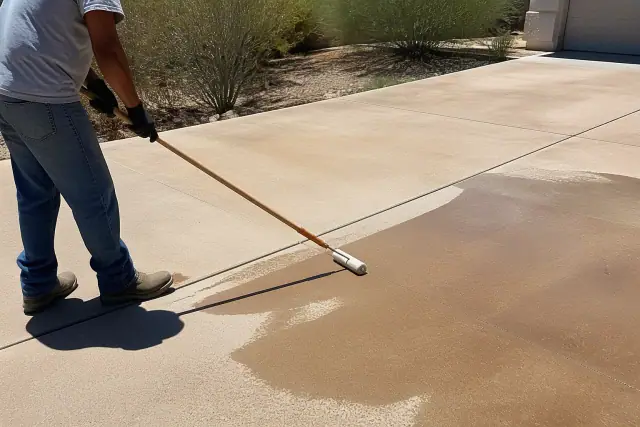
A close view should show sealer soaking into porous concrete without creating a glossy surface film. This illustrates why penetrating formulas avoid peeling and preserve traction.
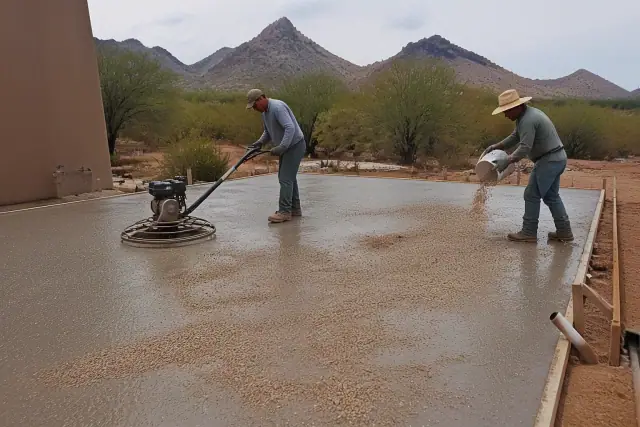
Show a decorative patio or pool-deck edge with a matte or glossy finish and visible anti-slip texture. The comparison explains why appearance and wet-foot safety must be considered together.
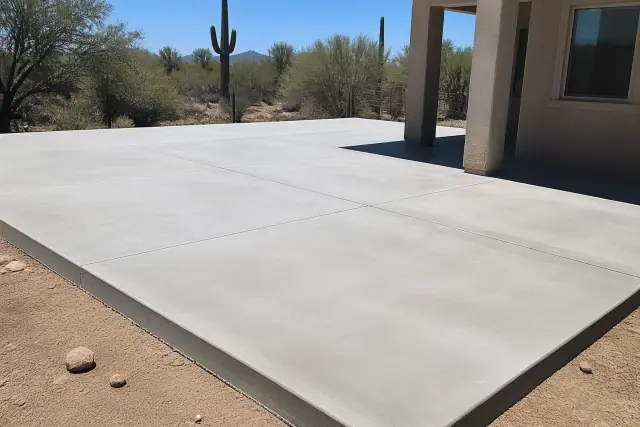
Show pressure-washed concrete with repaired cracks and no trapped moisture before thin coats are applied. Surface preparation is central to preventing whitening, bubbling, and early failure.
Driveways and high-traffic exterior slabs favor breathable penetrating sealers, while decorative patios and stamped concrete may benefit from UV-resistant acrylic or polyaspartic topcoats.
Compare vehicle traffic, bare feet, pool water, irrigation runoff, desired gloss, slip resistance, stain exposure, and whether the slab is indoors or in full sun.
Acrylic typically needs reapplication every 1-3 years; polyurethane lasts 5-7 years; penetrating and epoxy options commonly last 5-10 years; polyaspartic can last 10-15 years.
Do not seal a damp or uncured slab, and avoid application outside the 50°F-90°F range. Film-forming products can whiten or bubble if moisture becomes trapped.
| Sealer Type | Best Fit | Finish | Typical Lifespan |
|---|---|---|---|
| Penetrating | Driveways and high-traffic exterior slabs | Natural and breathable | 5-10 years |
| Acrylic | Patios, walkways, and decorative concrete | Matte to glossy | 1-3 years |
| Polyurethane | Garage floors and high-wear areas | Glossy and durable | 5-7 years |
| Epoxy | Interior floors and pool-deck edges | Hard and glossy | 5-10 years |
| Polyaspartic | Commercial and fast-turnaround work | Glossy and UV-stable | 10-15 years |
For most full-sun driveways, a water-based, low-VOC penetrating silane/siloxane sealer provides a natural, breathable finish that resists UV, salt, hot-tire pickup, and chloride intrusion without becoming slick. Decorative patios, stamped concrete, and pool-deck transitions call for appearance and traction decisions: acrylic can provide an affordable matte or wet look, while polyaspartic offers a more durable UV-stable film. Water-based choices also dry faster, resist yellowing, and align with Pima County air-quality guidance.
Preparation includes pressure washing dirt and efflorescence, patching cracks or spalling, complete drying, thin even coats, and a cure period before foot traffic. Professional sealing typically costs $0.40-$0.90 per square foot; standard acrylic may run roughly $20-$40 per 50 square feet, while a 1,080-square-foot driveway can exceed $1,000 depending on preparation and sealer grade. DIY materials cost less, but surface preparation and warranty coverage differ; one gallon typically covers 150-300 square feet as porosity and solids content change.
How often should you reseal? Acrylic generally needs work every 1-3 years, penetrating products last 5-10 years, and polyaspartic systems may last 10-15 years; inspect annually after year three for early breakdown. When should you schedule? March-May and October-November are the preferred Tucson windows, while July-September humidity and peak summer slab heat can disrupt curing. Is oil- or water-based better? Water-based, low-VOC products are usually preferred because they dry faster and resist UV yellowing, while oil-based formulas may penetrate slightly deeper and create a richer wet look but have stronger odor and higher VOC content.
Share the slab type, current condition, traffic, sun exposure, and desired finish. Tucson Superior Concrete can help compare sealer chemistry, preparation needs, and timing for a driveway, patio, or pool deck in Pima County.