Start With the Sealer Type
Acrylic sealers generally last 1 to 3 years, penetrating sealers 5 to 10 years, and epoxy or polyurethane coatings 5 years or more when traffic and sun exposure are appropriate for the coating.
According to Tucson Superior Concrete, most concrete surfaces in the Tucson area need resealing every 2 to 3 years with a standard acrylic sealer, while penetrating sealers typically last 5 to 10 years. Sealer chemistry, desert sun, traffic, and water exposure determine where a driveway, patio, pool deck, or walkway falls within that range.
Acrylic sealers generally last 1 to 3 years, penetrating sealers 5 to 10 years, and epoxy or polyurethane coatings 5 years or more when traffic and sun exposure are appropriate for the coating.
South- and west-facing slabs in Tucson's 100-plus-degree summer days wear faster, as do surfaces exposed to vehicle traffic, chlorine splash, irrigation overspray, furniture, or constant foot traffic.
Place water on a clean section of concrete. If it absorbs and darkens the slab instead of beading on top, the existing sealer may be worn enough to justify closer inspection or resealing.
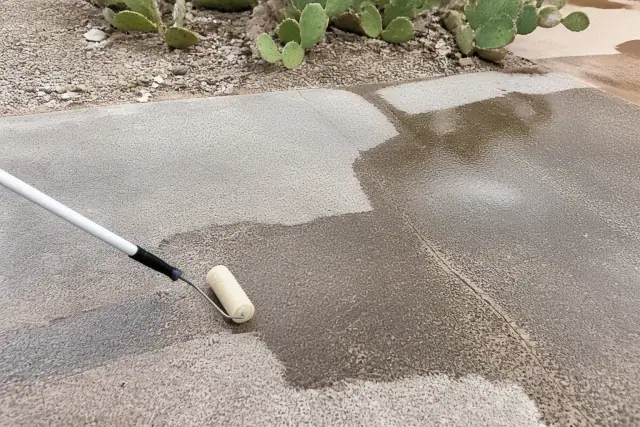
Show beads on a protected area beside a darker patch where water has soaked in. The contrast makes sealer wear easier to identify.
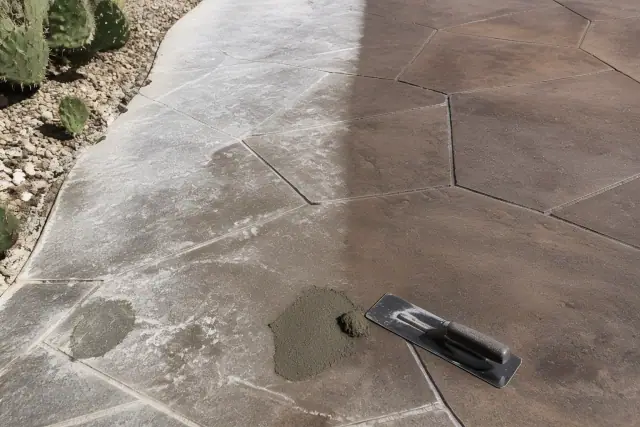
Compare an exposed stamped surface with a shaded edge to reveal UV-related color loss. Decorative concrete usually needs inspection within its 2- to 3-year resealing cycle.
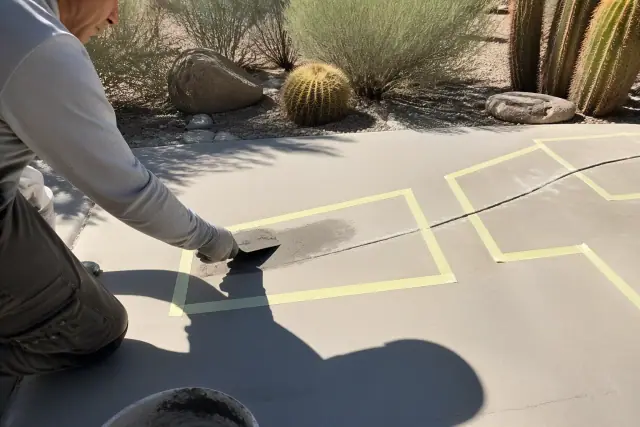
Show a cleaned slab after degreasing, crack and joint repair, and a full dry-out period. Two thin coats with cure time between passes help avoid a heavy, failure-prone buildup.
Plan on 2 to 3 years for acrylic-sealed driveways and patios. Heavy traffic and uncovered full sun move the interval closer to 2 years, while a shaded, covered patio may reach 3 years.
Pool decks often need resealing every 1 to 2 years because chlorine splash, sunscreen residue, water, and constant sun increase wear. A slip-resistant additive helps address wet-surface traction.
Walkways commonly run 3 to 4 years, with inspection every 2 years for public-facing sidewalks. Covered garage floors and ramada slabs that avoid direct UV typically go 3 to 5 years.
Penetrating or waterproofing sealants on foundations and footings typically last 5 to 10 years because they avoid UV and foot traffic. These products protect differently from cosmetic film-forming sealers.
| Surface | Typical Sealer | Resealing Interval |
|---|---|---|
| Driveway | Acrylic | 2-3 years |
| Patio | Acrylic | 2-3 years |
| Stamped concrete | Acrylic or epoxy | 2-3 years |
| Walkway | Penetrating | 3-4 years |
| Pool deck | Penetrating or acrylic | 1-2 years |
| Foundation | Penetrating or waterproofing | 5-10 years |
Resealing frequency is a condition-based range, not an automatic date. Film-forming acrylic enhances color and adds UV protection but wears sooner; penetrating silane or siloxane resists water without changing the appearance, while epoxy and polyurethane provide stronger abrasion or chemical resistance for suitable interior and commercial slabs.
Intense UV, monsoon humidity swings, winter freeze-thaw nights, caliche dust, vehicle or commercial traffic, oil drips, and pool or irrigation water can shorten sealer life across the Tucson metro, including the Catalina Foothills, Marana, and Green Valley. Pressure washing, joint inspection, and crack checks once a year help keep grit out and reveal spalling, popouts, or repairs that must cure before resealing.
Spring, generally March through May, is the best Tucson sealing window; late September through November is the second choice after monsoon moisture clears, and October temperatures in the 70s and 80s can support curing when the slab is dry. New concrete needs a full 28-day cure, while a typical residential sealing process can finish within a single day with foot traffic restricted for 24 hours and vehicles for 48 to 72 hours. Professional sealing runs roughly $0.40 to $0.90 per square foot or $1,350 to $3,500 for a full driveway project; a straightforward acrylic reseal on a two-car driveway around 600 square feet often costs $500 to $1,000, and smaller patios may total $300 to $700. Film-forming sealer can become slippery when wet, darken or yellow the surface, or develop peeling, white haze, blushing, delamination, or blisters when preparation, moisture control, or application timing is poor.
Share the surface type, last known sealer date, sun and water exposure, and any fading, absorption, cracks, or peeling you see. A Tucson concrete professional can evaluate preparation needs, repairs, and sealer choice before work is scheduled.